

As the New Year dawns, do you find yourself filled with optimism about your fitness goals, only to see that enthusiasm fizzle out by February? You’re not alone; many start the year with grand aspirations but struggle to maintain their momentum.
Every January, gyms fill up, fitness classes overflow and healthy meal plans take centre stage. The excitement of a fresh start is palpable, yet statistically speaking, most people abandon their resolutions within weeks. The path to achieving and sustaining a fitness resolution is often riddled with obstacles and distractions that can derail even the most determined individuals.
Setting a New Year’s fitness resolution is only the first step; the real challenge lies in making it a lasting part of your life. Success requires not only a solid plan but also strategies to stay motivated and overcome temptations. To turn your resolutions into a reality, it’s essential to grasp how to navigate the challenges ahead.
How to stick to a fitness regime
Sticking to a fitness regime can be challenging, but with the right strategies and mindset, it’s achievable. Here are some tips to help you stay on track:
1. Find your “why”
- Identify your motivations: What are your reasons for wanting to get fit? Are you aiming for better health, weight loss, increased energy, or improved self-esteem?
- Visualise your goals: Imagine how you’ll feel when you achieve your fitness goals. Use this visualisation as motivation during tough times.
2. Set SMART goals
Make sure to create realistic goals that are acceptable for your skill level and lifestyle.
- Specific: Instead of “get fit,” aim for “run a 5K in 3 months.”
- Measurable: Track your progress with apps or a journal.
- Achievable: Start small and gradually increase intensity.
- Relevant: Choose activities you enjoy to stay motivated.
- Time-bound: Set deadlines to keep yourself accountable.
3. Find an accountability buddy
- Share your goals with a friend or family member.
- Schedule regular check-ins to discuss progress and challenges.
- Consider joining a fitness class or group for added support.
- Join online forums or fitness groups for motivation and inspiration.
4. Create a consistent schedule
- Block out specific times for workouts in your calendar.
- Treat exercise like an important appointment.
- Be flexible and adjust your schedule as needed.
5. Make it fun
- Experiment with different activities to find what you enjoy.
- Listen to music or podcasts while working out.
- Reward yourself for reaching milestones.
6. Track your progress
- Use a fitness tracker or app to monitor your activity.
- Keep a journal to record your workouts and how you feel.
- Celebrate your achievements, no matter how small.
7. Don’t give up
- Setbacks are inevitable.
- Don’t let one missed workout derail your entire plan.
- Focus on progress, not perfection.
8. Prioritise recovery
- Get enough sleep and eat a healthy diet.
- Incorporate rest days into your schedule.
- Listen to your body and take breaks when needed.
- Pay attention to any pain or discomfort and consult a healthcare professional if needed.
9. Find a workout buddy
- Working out with a friend can make it more enjoyable and motivating.
- You can hold each other accountable and push each other to do your best.
10. Start small and gradually increase
- Don’t try to do too much too soon.
- Start with a few short workouts per week and gradually increase the duration and intensity.
- This will help you avoid injury and burnout.
11. Reward yourself
- Celebrate your accomplishments with small rewards, such as a new workout outfit or a massage.
- This will help you stay motivated and keep you on track.
12. Work with a personal trainer
Personal trainers can create customised training routines based on your fitness level, fitness goals, and any athletic events you wish to prepare for.
Personal trainers also provide built-in accountability and progress tracking, allowing you to create realistic goals based on your ability level and lifestyle.
13. Work with a physiotherapist
If you have any health problems or are recuperating from an illness or accident, a physiotherapist can help you work out in a way that is safe and pleasant for you.

Final thoughts
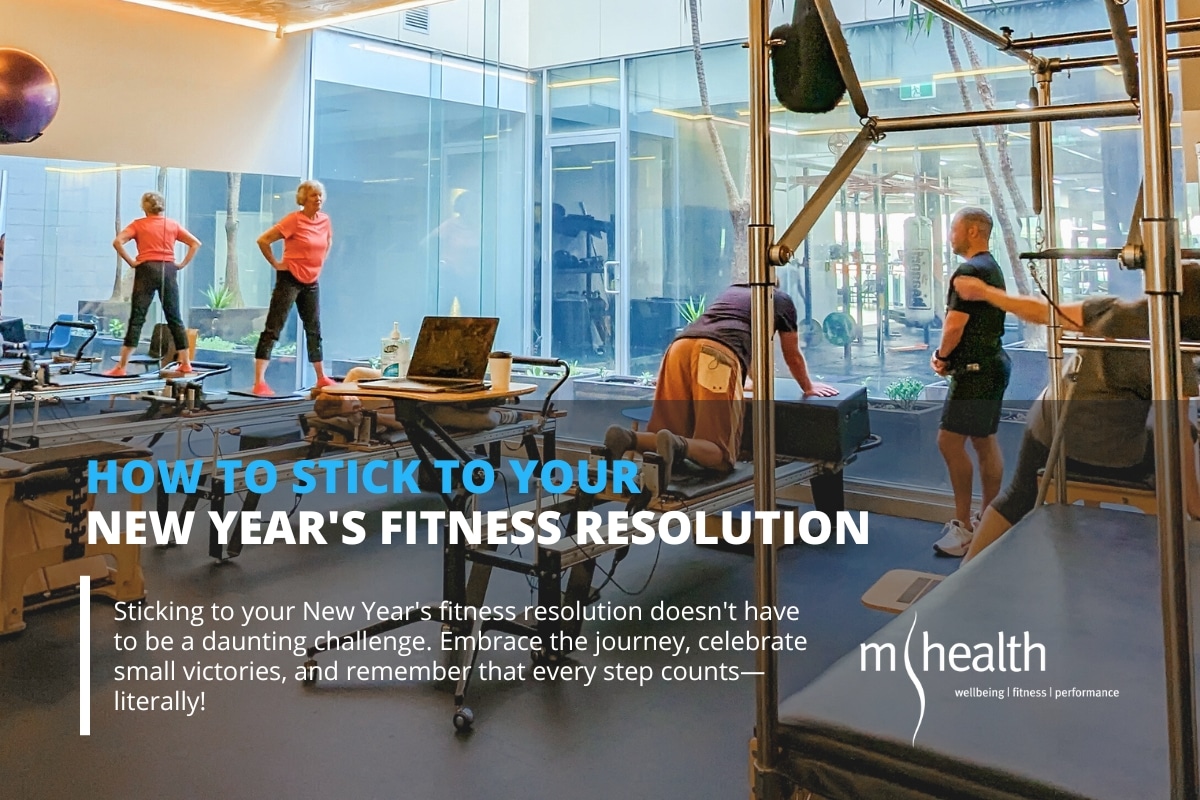
Sticking to your New Year’s fitness resolution doesn’t have to be a daunting challenge. Embrace the journey, celebrate small victories, and remember that every step counts—literally!
Surround yourself with supportive friends, mix things up to keep it fun, and don’t be afraid to adjust your goals as you go.
This year isn’t just about a resolution; it’s about crafting a healthier, happier you. So lace up those sneakers, stay committed, and watch as the new you takes shape one workout at a time! Cheers to transformation and a fantastic year ahead!
Book an appointment with one of our experienced physiotherapists today for a comprehensive assessment and customised treatment plan.