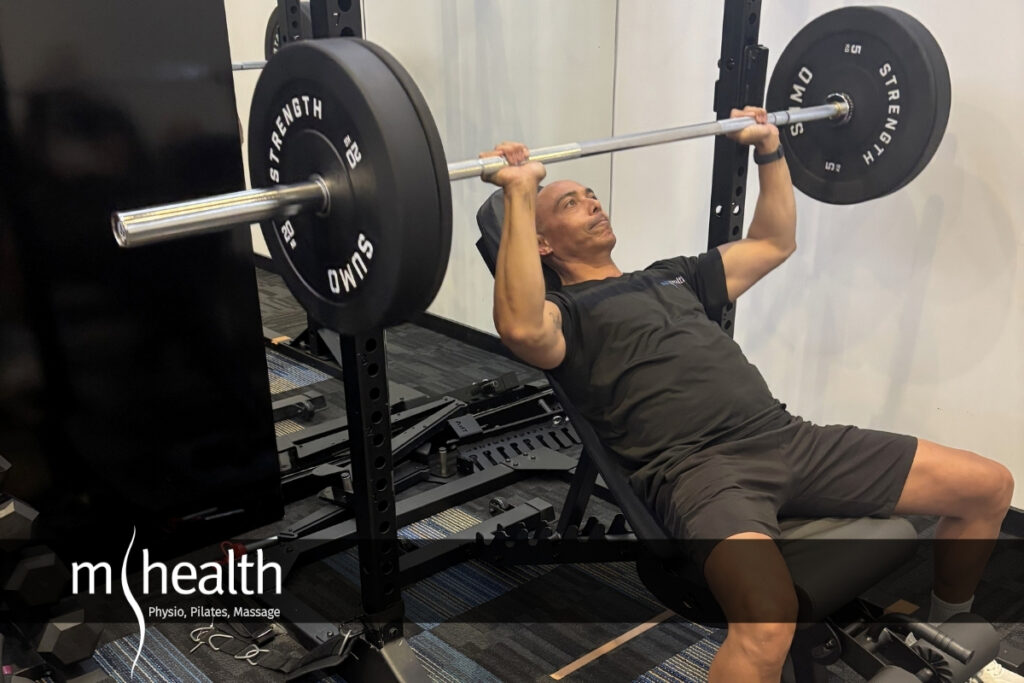
Turning 40 often brings a new awareness of how the body moves and recovers. Muscles may feel tighter after activity, recovery can take a little longer, and old injuries sometimes make themselves known again. Yet this stage of life also presents an important opportunity to build strength that supports long-term health and mobility.
Strength training plays a key role in maintaining muscle mass, protecting joints, and supporting balance as the body ages. When approached thoughtfully, it can also reduce the risk of injury, ease everyday aches, and improve confidence in movement.
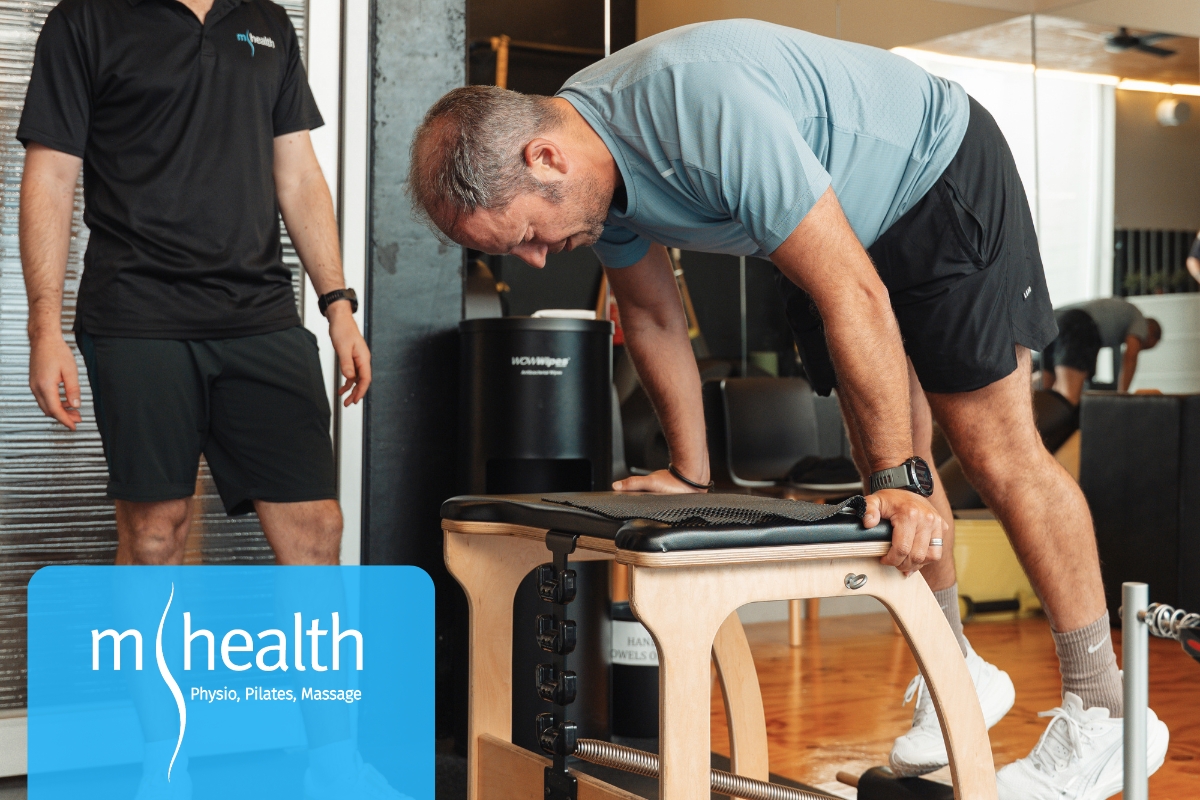
Physiotherapists start by assessing each person individually, taking into account injury history, current fitness level, and personal goals before designing anything. That personalised approach, combined with attention to technique and recovery, is what makes strength training so effective as the body changes with age.
Why 40 is the new golden age of lifting
Around age 30, we begin to lose muscle mass—a process called sarcopenia. By 40, if you aren’t actively fighting it, you’re losing about 3–5% of your muscle mass per decade.
- Bone density: Lifting places mechanical stress on bones, telling your body to keep them dense and strong (crucial for preventing osteoporosis later).
- Metabolic armour: Muscle is metabolically expensive. The more you have, the higher your resting metabolic rate, making weight management much easier.
- Joint stability: Strong muscles act as shock absorbers for your joints, particularly the knees and lower back.
The core principles of strength training for people over 40
Physiotherapists generally emphasise three pillars for the 40+ lifter:
- Progressive overload: You must challenge the muscle, but the progression can be more reps or better form, not just heavier plates.
- Eccentric control: Focus on the lowering phase of a lift. This builds tendon strength and prevents the “snap” injuries common in middle age.
- Quality over intensity: If your form breaks down, the set is over. Period.
The physio-approved strength training strategy for people over 40
Starting with an individual assessment
No two people over 40 arrive at the same starting point. Before a single exercise is prescribed, your physiotherapist carries out a thorough assessment of your movement quality, joint and muscle function, and health history. Your goals play an equally important role.
Someone managing a previous knee reconstruction who wants to return to recreational sport needs a fundamentally different program from someone who has been sedentary for years and wants to manage lower back pain.
The assessment captures those differences and translates them into a program that fits your body as it is right now, not a generic version built around someone else’s needs.
1. Compound over complex
Focus on movements that use multiple joints. These provide the best bang for your buck and mimic real-world movements.
- Squat patterns: Sitting down and standing up.
- Hinge patterns: Picking things up (deadlifts/kettlebell swings).
- Push/Pull: Pushing a door open or pulling a heavy grocery bag.
2. The 48-hour rule
Recovery slows down as we age. While a 20-year-old can hit legs three days in a row, you likely need 48 hours between working the same muscle groups. Aim for 2–3 full-body sessions per week.
3. Quality over quantity
Your ego is the biggest threat.
- Tempo: Control the weight. Use a 3-second down phase (eccentric) to build tendon strength.
- Rep range: You don’t need to lift 1-rep maxes. Staying in the 8–12 rep range is the sweet spot for muscle growth with lower joint impact.
4. The big 5 functional movements
A well-rounded program should revolve around these patterns, as they mimic daily life and keep you independent.
| Movement | Why It Matters | Physio-Friendly Variation |
|---|---|---|
| Squat | Knee/hip health & mobility. | Goblet Squats (keeps weight in front to protect the spine). |
| Hinge | Lower back resilience & glute power. | Kettlebell Deadlifts or Glute Bridges. |
| Push | Shoulder stability & bone density. | Incline push-ups or floor presses (limits shoulder strain). |
| Pull | Posture & upper back strength. | Single-arm rows (stabilises the core while working the back). |
| Carry | Grip strength & total body stability. | Farmer’s carry (walking with weights). |
5. The pre-hab checklist
Before you pick up a dumbbell, keep these physiological realities in mind:
- The 10-minute warm-up: In your 20s, a warm-up was optional. At 40+, it’s a requirement. Focus on dynamic stretching (arm circles, leg swings) to lubricate the joints.
- Listen to niggles: There is a difference between muscle burn (good) and joint sharp/stinging (stop immediately).
6. Common red flags
If you feel these, stop and reassess.
- Sharp, stabbing pain: (Never push through this).
- Joint swelling: Usually a sign the load was too heavy or the volume too high.
- Pain that worsens at night: Often indicates tendon irritation.
7. Nutrition and lifestyle
- Increase protein intake: To combat muscle loss, you must consume enough protein for repair. Aim for 1.0-1.2 grams of protein per kilogram of body weight every day.
- Prioritise sleep: Sleep is essential for muscle growth and joint healing.
Final thoughts
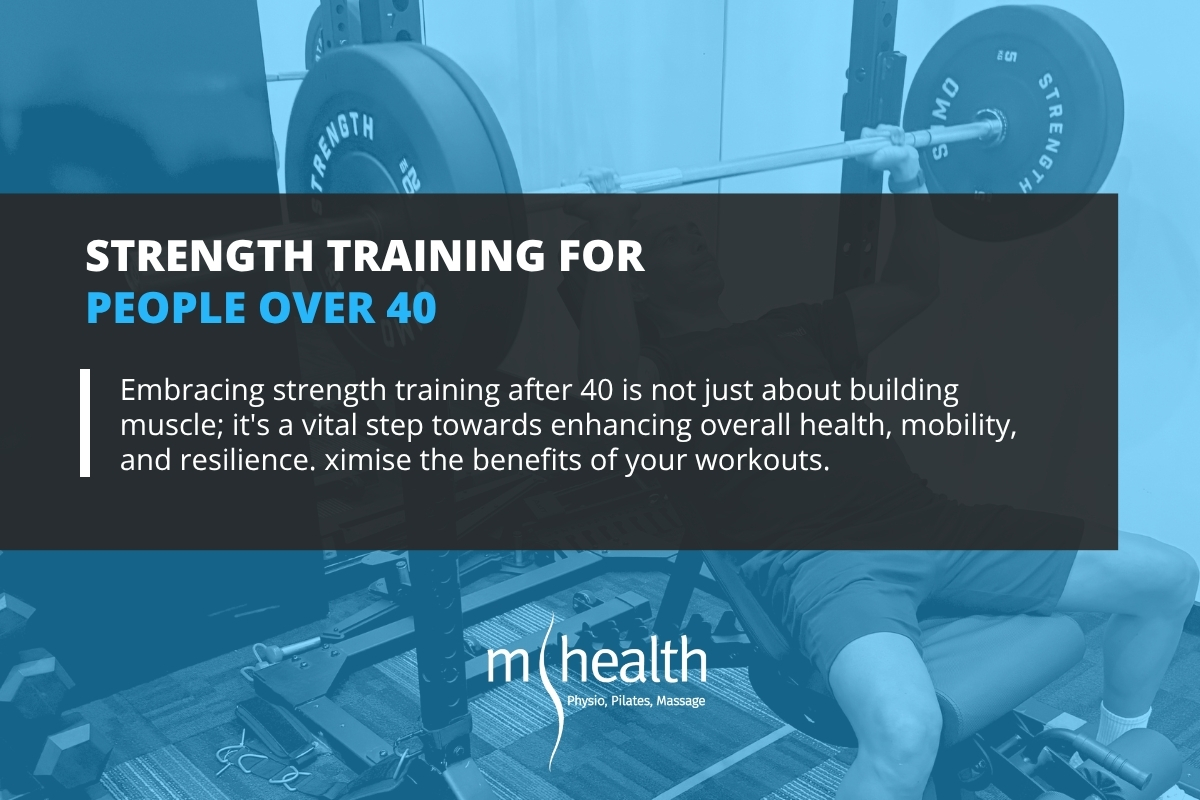
Embracing strength training after 40 is not just about building muscle; it’s a vital step towards enhancing overall health, mobility, and resilience.
By understanding the unique needs of your body and following a thoughtful approach, you can minimise the risks of injury and maximise the benefits of your workouts.
Remember, it’s never too late to start, and with the right guidance, you can thrive in this golden age of lifting. Prioritise your strength, invest in your health, and watch how it transforms your daily life.