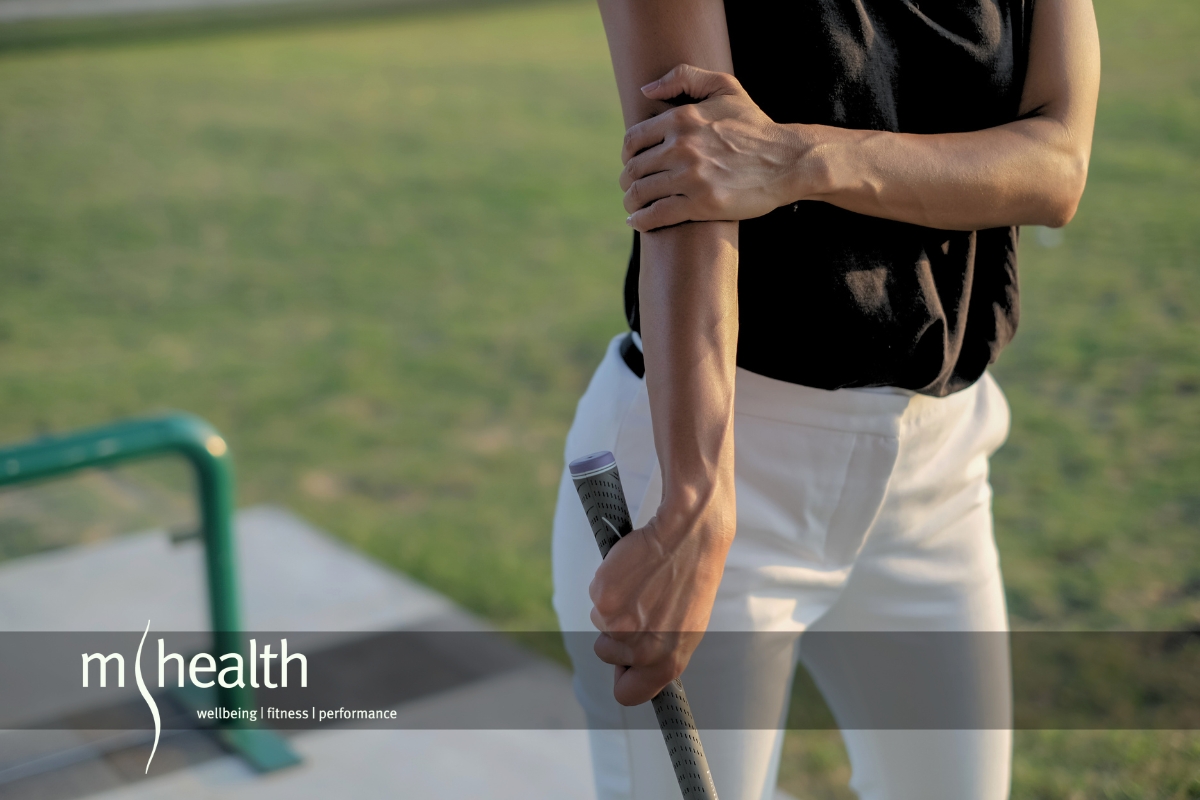
Are you tired of dealing with nagging pain in your elbow, preventing you from enjoying your favourite sport? Does it seem like every swing, grip, or hit sends a sharp reminder of your discomfort? If so, you’re not alone—thousands of athletes grapple with conditions like golfer’s elbow and tennis elbow, and the struggle to alleviate that pain can seem overwhelming.
Despite their names, these conditions affect much more than their respective sports. Golfer’s elbow (medial epicondylitis) and tennis elbow (lateral epicondylitis) are common injuries resulting from overuse and repetitive motion, impacting not only golfers and tennis players but anyone who engages in activities requiring gripping or wrist movement.
Fortunately, relief is possible with physiotherapy treatment! Understanding the differences between these conditions, their causes, and effective treatment options can help you regain control over your gameplay and daily activities.
Understanding golfer’s elbow and tennis elbow
What is golfer’s elbow?
Golfer’s elbow is a type of tendonitis that causes pain and inflammation in the tendons that connect the forearm and elbow. When you bend, grip, or twist items repeatedly, your tendons develop microscopic tears, causing wrist, elbow, and forearm pain.
If left untreated, golfer’s elbow can cause lifelong damage by reducing your elbow’s range of motion, producing chronic pain, and weakening your grip.
What is tennis elbow?
Tennis elbow, also known as lateral epicondylitis, is a painful condition caused by inflammation of the tendons that connect the forearm muscles to the outside of the elbow. It’s often associated with overuse or repetitive motions of the wrist and forearm.
While the name suggests it’s primarily caused by playing tennis, this condition can affect anyone who engages in activities that involve repetitive wrist movements, such as:
- Sports: Tennis, golf, baseball or racquetball
- Manual labour: Construction, carpentry or plumbing
- Computer work: Typing, using a mouse or playing video games
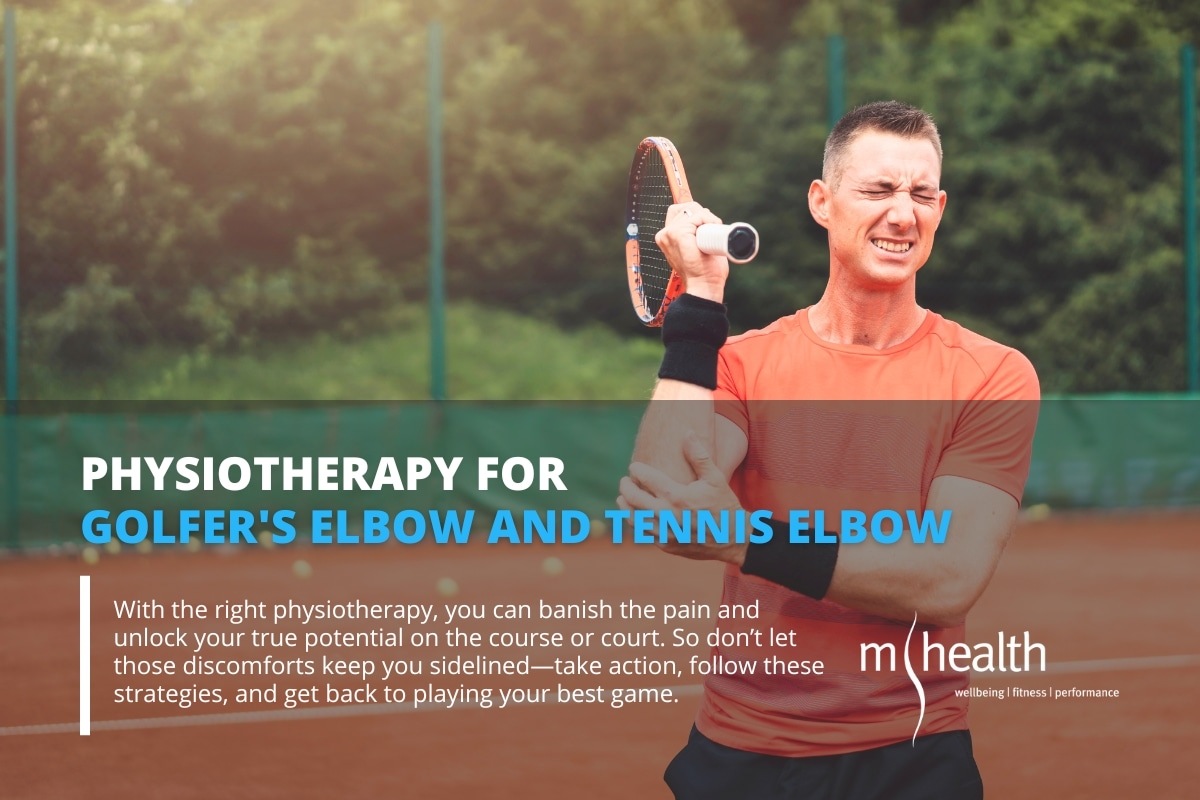
Common symptoms of golfer’s elbow and tennis elbow
- Pain in the elbow, often worse with activity.
- Tenderness to the touch.
- Weakness in the forearm.
- Difficulty gripping objects.
What’s the difference between golfer’s elbow and tennis elbow?
Tennis elbow and golfer’s elbow are conditions that cause pain and inflammation in the elbow. However, they affect different sides of the elbow.
- Golfer’s elbow (medial epicondylitis) affects the inside of the elbow. It involves the tendons that connect the muscles in your forearm to the bony bump on the inside of your elbow.
- Tennis elbow (lateral epicondylitis) affects the outside of the elbow. It involves the tendons that connect the muscles in your forearm to the bony bump on the outside of your elbow.
While both conditions are often caused by overuse or repetitive motions, they can also result from other factors like poor posture or gripping techniques.
Physiotherapy treatment for golfer’s elbow and tennis elbow
1. Rest and ice
- Rest: Avoid activities that aggravate the pain.
- Ice: Apply ice to the affected area for 15-20 minutes several times a day to reduce inflammation and pain.
2. Stretching and strengthening exercises
- Specific exercises: A physiotherapist can prescribe exercises tailored to strengthen the muscles around your elbow and improve flexibility.
- Gradual progression: Start with gentle exercises and gradually increase the intensity as your condition improves.
3. Manual therapy
- Soft tissue mobilisation: Techniques like massage and deep tissue therapy can help reduce muscle tension and improve blood flow.
- Joint mobilisation: Gentle manipulation of the elbow joint can help improve range of motion and reduce pain.
4. Modalities
- Ultrasound and / or eletrotherapy: these are considered “old school” treatment modalities now but an experienced physiotherapist will know whether these will really beneficial for your issue. If it has helped you in the past, there is a good chance it will help you again.
- Shockwave: a mechanical stimulus that “pummels” the aggravated tendon back to normal. Normally 5-6 treatment sessions are required for tendon issues that are not going away.
- Surgery: this is not a common intervention for golfers’ and tennis elbow. If it is being suggested to you it is more than likely that your condition involves more than just a tendinopathy.
5. Bracing or taping
- Support: A brace or tape can provide support to the elbow and reduce stress on the affected tendons. A great strategy for professionals who have to keep playing or workers who have to keep working.
It’s essential to consult with a physiotherapist for a personalised treatment plan. We can assess your specific condition and recommend the most appropriate techniques.
Preventing recurrence of golfer’s elbow and tennis elbow
- Warm-up and cool-down: Before and after activities, perform gentle warm-up and cool-down exercises.
- Gradual progression: Increase the intensity and duration of your activities gradually.
- Cross-training: Engage in a variety of activities to avoid overuse injuries.
- Ergonomic adjustments: If your job involves repetitive movements, consider making ergonomic adjustments to your workspace.

Final thoughts
Whether you’re swinging a club or smashing a serve, golfers’ elbow and tennis elbow shouldn’t hold you back from enjoying the game you love.
With the right physiotherapy, you can banish the pain and unlock your true potential on the course or court. So don’t let those discomforts keep you sidelined—take action, follow these strategies, and get back to playing your best game.
Remember, a healthy body translates to a happy golfer or tennis player, and your next victory is just around the corner! Drive on and serve strong!
Book an appointment with one of our experienced physiotherapists today for a comprehensive assessment and customised treatment plan.