Osteoarthritis & Joint Pain Support at mhealth
Osteoarthritis & Joint Pain
Osteoarthritis is one of the most common musculoskeletal conditions in Australia, and one of the most misunderstood. A lot of people are told it’s just wear and tear, that rest is the answer, or that they’ll simply have to live with it. The research tells a different story.
Movement is one of the most powerful tools available for managing osteoarthritis. At mhealth in Mentone, we help you build the strength, confidence, and capacity to stay active, and keep it that way.
Whether you’re managing knee pain that’s been quietly building for years, a hip that limits your walking, or joints that stiffen every morning, our team can help you understand what’s driving your symptoms and build a plan that works for your life.
Understanding Osteoarthritis & Joint Pain
What Is Osteoarthritis?
Osteoarthritis (OA) is a joint condition that affects the cartilage, bone, synovium, and surrounding tissues of a joint. It’s the most common form of arthritis and affects approximately 2.1 million Australians, with the knee and hip being the most frequently involved joints.
Here’s what most people don’t hear: OA is not simply a matter of cartilage wearing away. Current research shows it’s a biologically complex condition involving inflammation, immune signalling, and changes at a cellular level. This means it’s not a one-way road, and it doesn’t mean activity is making things worse. In fact, appropriate movement and progressive loading can actively support joint health.
Common Symptoms of Osteoarthritis
People with OA describe their symptoms differently depending on the joint involved and the stage of the condition. Some of the most common presentations we see at mhealth include:
- Stiffness in the affected joint, particularly first thing in the morning or after periods of rest
- Reduced range of motion – the joint doesn’t move as far as it used to
- Swelling or inflammation around the joint
- Pain during or after movement, often worse by the end of the day
- A grinding or grating sensation (called crepitus) when the joint moves
Symptoms tend to fluctuate. Some days are better than others. This is normal and doesn’t necessarily mean the joint is getting worse or that you’ve done damage.
Common Causes of Osteoarthritis and Joint Pain
OA rarely has a single cause. It’s usually the result of several contributing factors, and understanding those factors is what guides an effective management plan.

Age is the most consistent risk factor. OA is more common in older populations, partly because of natural changes in joint tissues over time and partly because of accumulated load on the joint across decades.

Previous joint injuries play a significant role, particularly at the knee. Ligament tears, meniscus injuries, and fractures involving the joint surface can increase the likelihood of OA developing later in life.

Physically demanding or repetitive work places ongoing stress on specific joints. Occupations involving heavy lifting, kneeling, or prolonged standing are associated with higher rates of hip and knee OA.

Muscle weakness around the joint is both a cause and a consequence of OA. When the muscles that support a joint aren’t strong enough to absorb and distribute load, more of that load passes through the joint itself. Building strength around the affected joint is one of the most effective things you can do.

High body weight increases the load on weight-bearing joints, particularly the knees and hips. Even modest reductions in body weight can meaningfully reduce joint load and symptom severity.

Family history of OA increases your risk, though it doesn’t determine your outcome. Many people with a strong family history of OA manage the condition well with the right approach.

Osteoarthritis Is Not Just “Wear and Tear”
This is one of the most important shifts in how OA is understood, and it matters for how it’s managed.
For a long time, OA was described as cartilage wearing away over time, like a tyre losing tread. But that model is outdated. Research now shows that OA is a whole-joint disease, involving cartilage, bone, the joint lining (synovium), and even the nerves within the joint.
At a cellular level, cartilage cells can become dysfunctional and actively worsen the condition. Mechanical stress, including the way load is applied to a joint, can trigger inflammatory responses within the joint itself. This means the way you load a joint matters, not just how much.
Importantly, the research is clear: movement helps. The same biological processes that are triggered by excessive or poorly managed load can actually be regulated by appropriate, progressive loading. Strength training and aerobic exercise (walking, cycling, swimming) produce the best outcomes for OA symptoms. Not rest. Not avoidance.
The key message is not that movement is harmful. It’s that how much, how fast, and how often load is applied makes all the difference.
Which Joints Are Commonly Affected by Osteoarthritis?
OA can affect any joint, but it’s most commonly seen in:

Knee OA is the most frequently managed form of OA in physiotherapy. Symptoms typically include pain with stairs, rising from a chair, walking on uneven ground, and first thing in the morning. Quadriceps and hamstring strengthening, combined with load management, forms the core of rehabilitation.

Hip OA often presents as groin pain, reduced range of motion, and difficulty with activities like walking long distances, getting in and out of a car, or putting on shoes. Gluteal and hip strengthening is central to management.

Hand and finger OA is particularly common in older women and involves pain, swelling and stiffness in the small joints. Grip strength exercises and activity modification can help manage symptoms.

Spine OA (also called facet joint OA) can contribute to back and neck stiffness, particularly in older adults. It’s often managed alongside general spinal rehabilitation.
The underlying principles of management, including progressive strengthening, load management, and movement, apply across all joints.
Frequently Asked Questions About Osteoarthritis and Joint Pain
Does exercise make osteoarthritis worse?
Is osteoarthritis the same as arthritis?
Do I need a scan to confirm osteoarthritis?
Will I need a joint replacement?
Is it safe to exercise through the pain?
When should I see a physio for osteoarthritis?
References
- Australian Institute of Health and Welfare (2024). Osteoarthritis. Chronic musculoskeletal conditions report. https://www.aihw.gov.au/reports/chronic-musculoskeletal-conditions/osteoarthritis
- Arthritis Australia. Physical activity and exercise. Managing arthritis resources. https://www.arthritisaustralia.com.au/managing-arthritis/living-with-arthritis/physical-activity-and-exercise/
- Loeser RF et al. (2012). Osteoarthritis: a disease of the joint as an organ. Arthritis & Rheumatism, 64(6), 1697–1707.
- Hunter DJ, Bierma-Zeinstra S. (2019). Osteoarthritis. The Lancet, 393(10182), 1745–1759.
- Bannuru RR et al. (2019). OARSI guidelines for the non-surgical management of knee, hip, and polyarticular osteoarthritis. Osteoarthritis and Cartilage, 27(11), 1578–1589.
- Fransen M et al. (2015). Exercise for osteoarthritis of the knee. Cochrane Database of Systematic Reviews, Issue 1.
- Choosing Wisely Australia. Osteoarthritis management recommendations. https://www.choosingwisely.org.au/
Osteoarthritis & Joint Pain Articles

Lower Back Pain Causes: A Practical Guide to Working Out What’s Going On
Lower back pain shows up in dozens of ways, and the cause isn’t always obvious. This guide walks through the six most common reasons your lower back might be hurting, from muscle strain and disc irritation to posture pain and training-related injuries, plus the warning signs that mean it’s worth booking an assessment rather than waiting it out.

How Physios Use Strength Testing to Reduce Injury Risk
Strength testing gives physiotherapists precise, measurable data to guide rehab decisions, identify hidden deficits, and support safer return to sport or activity. Here is how it works in practice at mhealth.

Strength Training for People Over 40: A Guide From Your Physio
Strength training after 40 is essential for maintaining muscle mass, supporting joint health, and improving overall mobility. With a physio-guided approach focused on technique, recovery, and progression, you can stay strong, active, and injury-free for years to come.
How mhealth Treats Osteoarthritis and Joint Pain
Assessment: Understanding Your Joint
Your care at mhealth starts with a thorough assessment. We look at how you move, test the strength and mobility of the affected joint and the surrounding regions, and identify contributing factors like load, activity levels, work demands, and lifestyle habits.
For knee OA, for example, we assess not just the knee but also the hip and foot, since mechanics above and below the joint influence how load passes through it. Where relevant, we use technology like our AXIT strength assessment system to gather objective strength data, set meaningful benchmarks, and track your progress over time.
Understanding where the gaps are, whether that’s strength, range of motion, balance, or load tolerance, is what allows us to build a program that actually moves the dial.
Strengthening: The Most Important Thing You Can Do
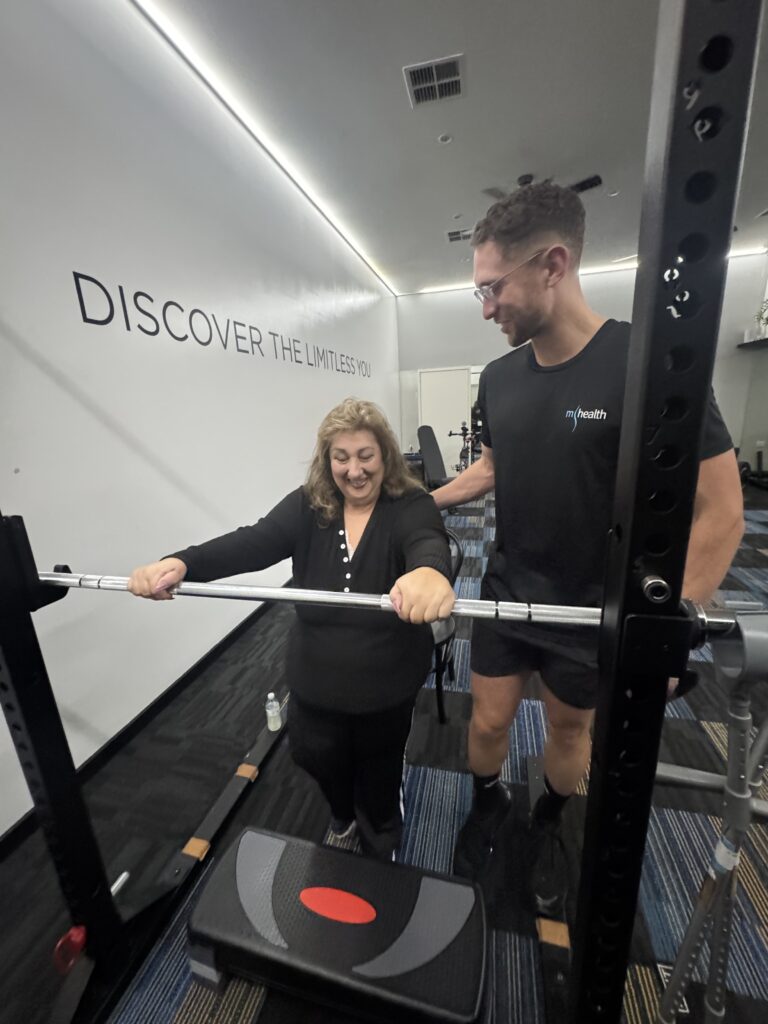
Strengthening the muscles around the affected joint is the single most supported intervention for OA. For knee and hip OA, that means targeting the quadriceps, hamstrings, glutes, and calves. The goal is to build the capacity of the musculature to absorb and distribute load, protecting the joint in the process.
Key principles we work to:
- Progressive overload matters. The muscles need to be challenged to adapt. Some discomfort during exercise is acceptable and safe.
- Programs are individualised and progressed over time. What’s appropriate at week two looks different from what’s appropriate at week eight.
- Consistency is more important than intensity, particularly in the early stages. Showing up regularly and building gradually is what creates lasting change.
- Delivery format varies based on your goals and preferences: gym-based programs, home exercise plans, mStrong strength classes, and clinical Pilates are all options depending on your presentation.
Load Management
Learning to pace activity appropriately is just as important as building strength. One of the most common patterns we see in OA is the ‘boom-bust’ cycle: pushing hard on good days, flaring up the next, then resting until things settle, and repeating. This cycle keeps symptoms unpredictable and makes building capacity very difficult.
Load management at mhealth includes graded exposure to activities that have become uncomfortable, practical guidance around pacing across the day and week, and clear frameworks for adjusting load when symptoms flare.
Balance and Proprioception Training
OA affects not just the joint, but the body’s ability to sense where that joint is in space. This is called proprioception, and reductions in it are a meaningful contributor to falls risk and functional limitation in people with OA.
Balance and proprioception training is integrated into rehabilitation programs at mhealth, progressed alongside strength work to build the kind of whole-joint resilience that protects you in real life, not just in a clinical setting.
Manual Therapy
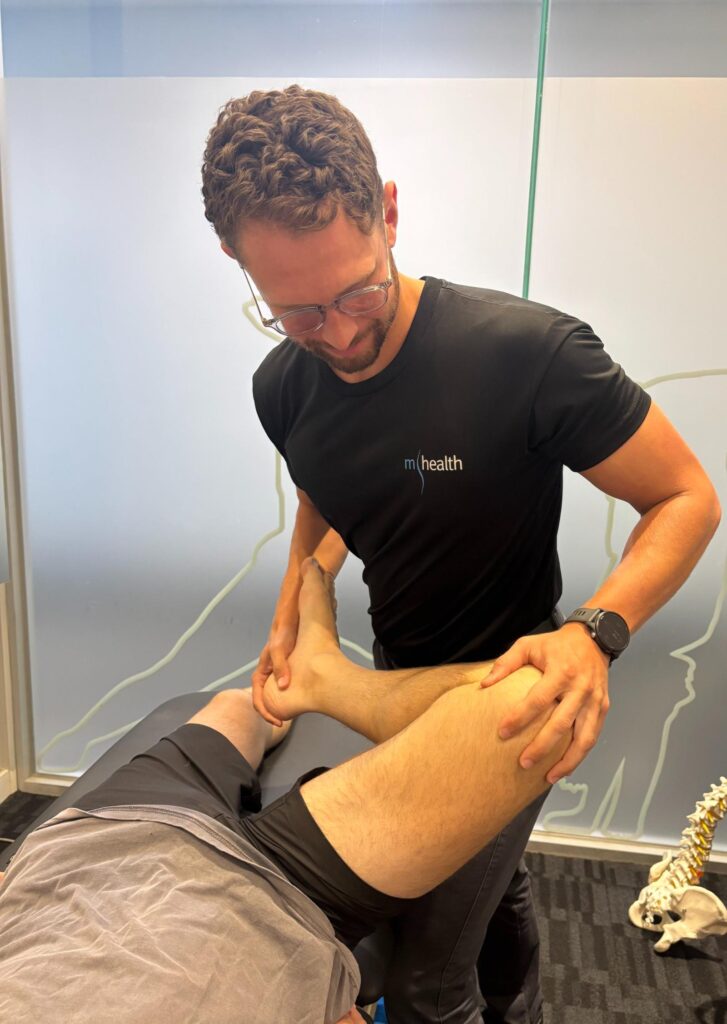
Hands-on techniques including joint mobilisations and soft tissue work can provide short-term pain relief and improve range of motion. This is useful for reducing the barrier to exercise participation, particularly during a flare-up or in the early stages of rehabilitation.
Manual therapy is not a long-term standalone solution for OA. It works best as an adjunct that allows you to engage more fully in the active parts of your rehabilitation. Our team is clear about this, and your program will be built around exercise as the primary driver of change.
Education and Flare-Up Management
Understanding what OA is, and what it isn’t, changes how people manage it. Knowing that movement helps rather than harms, that flare-ups are common and manageable, and that symptoms don’t always reflect the state of the joint is genuinely empowering.
We spend time helping you understand your condition, identify your triggers, and build a clear plan for the harder days. If onward referral to a GP or specialist is appropriate, we’ll facilitate that too.
How to Manage an Osteoarthritis Flare-Up
Flare-ups are a normal part of living with OA. They don’t mean the joint is getting worse or that you’ve done damage. They usually mean the joint has been loaded beyond what it can currently tolerate.
Recognising a Flare-Up
- A noticeable increase in pain beyond your usual level
- More stiffness than normal, especially in the morning or after rest
- Swelling in the joint
- Activities that are normally manageable becoming difficult
- Pain that takes longer than usual to settle
Common triggers include sudden increases in activity, new or unfamiliar movements, prolonged repetitive activity, poor sleep, and higher stress levels.
Managing a Flare-Up
- Reduce load temporarily, but don’t stop moving entirely. Gentle movement reduces stiffness and helps maintain joint health.
- Modify your exercises. Reduce the range of motion, resistance, or volume rather than stopping altogether.
- Use heat or ice based on what feels better for you. There’s no universal rule.
- Gradually return to your normal activity levels over several days as symptoms settle.
The goal is to return to baseline within a few days to a week. Flare-ups that don’t settle, or that are becoming more frequent, are worth discussing with your physio so the program can be adjusted.
Who Is Most at Risk of Osteoarthritis and Joint Pain?
Modifiable Risk Factors
- High body weight and its effect on load through weight-bearing joints
- Muscle weakness around the affected joint
- Low overall physical activity and deconditioning
- Physically demanding or repetitive work without adequate recovery
- Poor sleep quality
- High or unmanaged stress levels
Non-Modifiable Risk Factors
- Increasing age
- Family history of OA
- Previous joint injuries, particularly at the knee
- Anatomical factors including joint alignment
The encouraging reality is that the modifiable factors respond well to physiotherapy, progressive exercise, and lifestyle changes. Building strength and improving load tolerance are achievable at any age.
What You Can Do Between Appointments
What you do on your own between sessions matters just as much as the treatment itself.

Stay active. Motion is lotion for your joints, but pacing matters. Aim for regular, moderate activity rather than bursts of effort followed by rest. Walking, swimming, cycling, and water-based exercise are all good options for maintaining joint health and managing symptoms.

Build and maintain strength. Strength doesn’t just reduce pain. It protects the joint, improves balance, and builds the capacity to keep doing the things you want to do. Consistency over months is what creates lasting results.

Pace your activities. Take regular breaks and spread demanding activities across the day. Avoid doing everything on your best days, then paying for it the rest of the week.

Wear supportive footwear. This is particularly relevant if you’re managing knee, hip, or lower back symptoms. Footwear affects load distribution through the entire lower limb. Your physio or podiatrist can advise on what’s appropriate for you.

Manage your weight. Even a modest reduction in body weight produces a meaningful reduction in the load on weight-bearing joints. Combining regular activity with a balanced, protein-sufficient diet supports both joint health and muscle development.

Prioritise sleep. Poor sleep is strongly linked to increased pain sensitivity. A consistent sleep routine and a comfortable sleep position both contribute to recovery and daily symptom management.
When to See a Physio for Osteoarthritis and Joint Pain
Book an appointment if you are experiencing:
- Joint stiffness or pain that has persisted for more than one to two weeks
- Symptoms that are limiting your ability to walk, exercise, work, or get through daily tasks
- Recurrent flare-ups that are becoming harder to manage
- Reduced confidence in the joint: a feeling of instability, giving way, or not trusting it
You don’t need a GP referral to see a physiotherapist in Australia.
When It May Be Something Else
While OA is common, some presentations warrant prompt medical review. Seek medical attention if you experience:
- Severe joint swelling that comes on suddenly, with significant heat and redness, especially alongside fever: this may indicate an infection or inflammatory arthritis
- Joint pain following a fall or injury with the possibility of a fracture
- Rapidly worsening symptoms without a clear explanation
- Unexplained weight loss alongside joint pain
These presentations are less common, but they need investigation rather than physiotherapy management.
Get Support for Osteoarthritis and Joint Pain
Physiotherapists Mentone
If osteoarthritis or joint pain is affecting your activity, your confidence, or your quality of life, the right support makes a real difference. There’s a lot you can do, and our team can help you get started.
mhealth is located in Mentone and services the surrounding suburbs including Beaumaris, Parkdale, Black Rock, Sandringham, Cheltenham, Mordialloc, and Chelsea. Book an appointment with mhealth or contact our team to find out how we can help.
Not Sure If This Is the Right Page?
You don’t need a confirmed diagnosis to book an appointment. If you’re experiencing pain, stiffness, or movement issues and aren’t sure what’s causing them, our team can help assess your symptoms and guide you in the right direction.