If a hard workout leaves you sore for days, the answer usually isn’t to stop moving. It’s to change how you move. Low-impact exercises for back pain and tender joints let you stay active without the pounding that aggravates sensitive tissue. They keep your spine mobile, your muscles working, and your fitness ticking over while irritated structures settle.
The Australian physical activity guidelines recommend adults do 2.5 to 5 hours of moderate activity each week, and low-impact options make that target realistic when you’re managing pain. Before starting anything new, it’s worth a quick chat with a physiotherapist, especially if your pain is recent, severe, or not improving. Here are nine low-impact activities worth building into your week.
- Walking
Walking is the most accessible low-impact exercise there is. It costs nothing, needs no equipment, and slots into a day without much planning, whether that’s a lap of the block before work or a stroll along the foreshore after dinner. For the back, gentle walking keeps the spine moving through a comfortable range and encourages blood flow to muscles that stiffen up with sitting.
It’s also weight-bearing, which means it gives your bones a reason to stay strong. If you’re easing back in after a flare-up, start with shorter walks on flat ground and build the distance as your body allows. Walking is one of the simplest low-impact activities for bone strength and general fitness.
- Swimming and Water Exercise
Water takes the load off. When you’re submerged to chest height, your body carries a fraction of its usual weight, which makes swimming and water-based exercise well suited to people with osteoarthritis, joint disease, or general musculoskeletal soreness. You get the cardiovascular and muscular benefits of movement without your joints bearing the brunt of it.
Swimming laps is one option, but it isn’t the only one. Water walking, gentle aqua aerobics, and slow controlled movement in a heated pool all count. If freestyle aggravates your neck or lower back, backstroke or simply walking lengths of the pool can be easier on the spine. The point is steady movement, not speed.
- Clinical Pilates
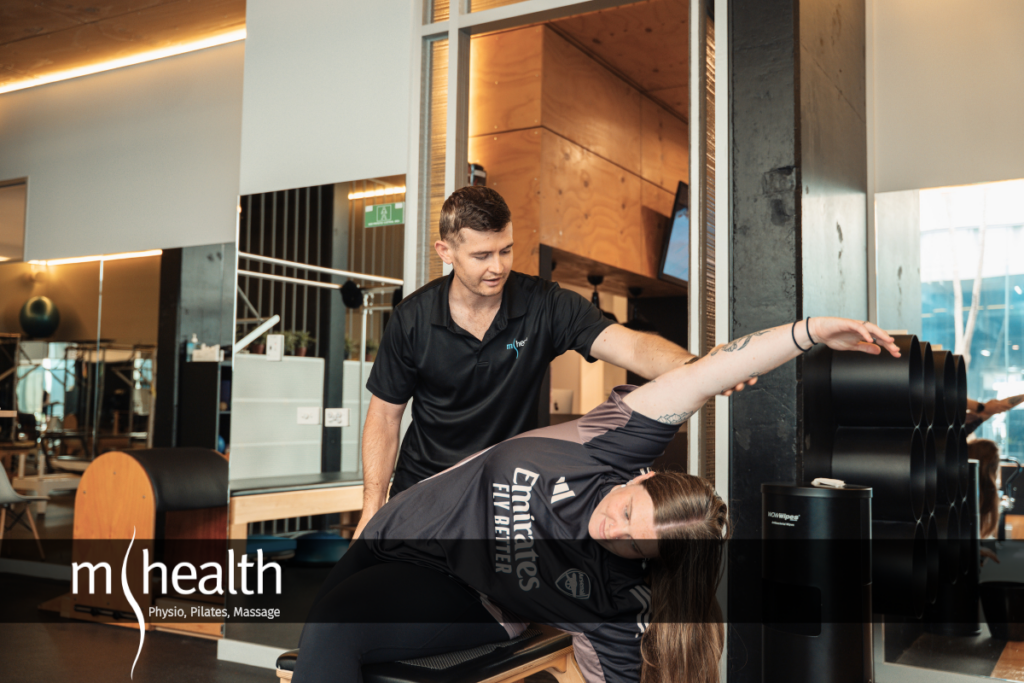
Pilates has a strong reputation for back pain, and for good reason. The method centres on controlled movement and core stability, training the deep abdominal and spinal muscles that support the lower back through everyday tasks. A stable, well-supported torso takes pressure off structures that tend to get overloaded.
Clinical Pilates takes this a step further. Rather than a general class, sessions are guided by a physiotherapist and tailored to your body, your history and what you’re trying to manage. That makes it a good fit if you’re managing a specific issue rather than exercising for general fitness alone.
- Stretching and Mobility Work
Simple stretching is easy to underrate. Taking a muscle gently through its range keeps it supple and can ease the tightness that creeps in after hours in one position. You can do it almost anywhere, from a spare few minutes at your desk to a wind-down before bed.
For desk workers this matters more than most realise. Sitting for long unbroken stretches loads the same spinal structures over and over, and that steady, low-grade load is a common contributor to lower back pain. Standing up to move and stretch once or twice an hour breaks that pattern and keeps the back more comfortable through the day.
- Light Strength Training
Strength training is one of the most valuable things you can do for long-term joint and bone health, and it doesn’t require heavy loads or a gym full of equipment. Working with light weights, resistance bands, or your own body weight builds lean muscle that supports your joints and helps maintain bone density, which matters for slowing the effects of osteoporosis.
Load is the part to get right. Start light, somewhere around 2 to 5 kg or a band with gentle resistance, and add small increments only once a movement feels controlled. mHealth’s strength and conditioning classes are built around this kind of graded approach. Healthy Bones Australia also has practical guidance on exercise for bone health.
- Golf
Golf earns its place on a low-impact list because a round involves a lot of walking, often several kilometres, at a relaxed and steady pace. That’s genuine cardiovascular exercise wrapped up in a few hours outdoors.
The swing is the catch. It asks the spine to rotate at speed under load, and for some people that becomes a source of back or shoulder trouble. Warming up properly, easing into your full swing, and keeping up some general strength and mobility work all help. If golf is a regular part of your life, mHealth’s mgolf program looks specifically at swing-related injury and conditioning.
- Stationary Cycling and Low-Impact Cardio
Cardio doesn’t have to mean running. A stationary bike gives you a genuine cardiovascular workout while your joints stay supported and the impact stays close to zero, which makes it a reliable option on days when your knees or back won’t tolerate much. An elliptical trainer or a recumbent bike does a similar job.
Getting your heart rate up has a useful side effect for pain. Exercise prompts the body to release endorphins, which can take the edge off discomfort and lift your energy and mood. Begin with short, easy sessions and lengthen them gradually as your fitness returns.
- Yoga
Yoga blends flexibility, balance and gentle strengthening, and its focus on slow breathing has a calming effect that can help with the tension that builds around persistent pain. Most styles can be scaled right back, so you don’t need to be putting your foot behind your head to benefit.
If you have a sensitive lower back, be cau
tious with deep forward folds and end-range twists, and let a teacher know what you’re working around so they can offer alternatives. Starting with a beginner or restorative class is sensible. If you’re weighing it up against other options, this comparison of Pilates, yoga and gym training is a useful read.
- Tai Chi
Tai chi looks gentle because it is. This slow, flowing martial art moves the body through controlled patterns that build strength, balance and coordination without any jarring or strain. It suits a wide age range, and it’s particularly valued for older adults, where better balance means a lower risk of falls.
Sessions are easy to scale. A short practice a couple of times a week is enough to notice improvements in stiffness and steadiness. Better Health Channel has a helpful overview of tai chi and its health benefits if you want to read more before joining a class.
When to Check with a Physio for Lower Back Pain
Low-impact exercise is gentler by design, but gentle doesn’t mean risk-free. Mild muscle soreness for a day after a new activity is normal. Sharp pain during a movement, pain that lingers well beyond a session, or pain that travels into a limb is worth paying attention to.
It’s a good idea to get assessed before starting if your pain is recent and severe, if you’re returning from an injury or surgery, or if you have a health condition that affects how you should exercise. A physiotherapy assessment can match the activity to your body and flag anything to modify.
Low-impact Exercise for Back Pain: Your Questions Answered
| Question | Answer |
|---|---|
| What are the best low-impact exercises for back pain? | Walking, swimming, clinical Pilates, tai chi and gentle stretching are among the best low-impact exercises for back pain. The right choice depends on your symptoms and fitness level. Each keeps you moving and builds strength without the jarring load that can aggravate a sensitive spine. |
| Is walking good for lower back pain? | Yes, gentle walking is often recommended for lower back pain. It keeps the spine moving through a comfortable range, encourages blood flow, and is weight-bearing, which supports bone health. If you’re recovering from a flare-up, start with short walks on flat ground and build distance gradually. |
| How often should I do low-impact exercise? | The Australian physical activity guidelines recommend adults aim for 2.5 to 5 hours of moderate activity each week. Low-impact exercise makes that target realistic when you’re managing pain. Spreading activity across most days, rather than doing it all at once, tends to be easier on the body. |
| Can I exercise with back pain, or should I rest? | For most back pain, staying gently active is better than resting completely. Prolonged rest tends to stiffen the back and slow recovery, while low-impact exercise keeps you moving safely. If pain is severe, recent, or travels into a limb, get assessed before continuing. |
| Is Pilates or yoga better for back pain? | Both can help. Pilates focuses on core stability and controlled movement, which directly supports the lower back. Yoga adds flexibility and breathing techniques that ease tension. Clinical Pilates, guided by a physiotherapist, is often suited to people managing a specific condition rather than exercising for general fitness. |
| When should I see a physio before starting exercise? | See a physiotherapist before starting new exercise if your pain is recent and severe, you’re returning from an injury or surgery, or you have a health condition that affects how you should train. An assessment matches activities to your body and flags anything to modify. |
Final Thoughts
Pain doesn’t have to be the price of staying fit. Low-impact exercises for back pain and sore joints give you a way to keep moving, maintain strength, and protect your long-term health without the flare-ups that come with high-impact training. The nine activities here suit a wide range of ages and fitness levels, and most can be scaled to wherever you’re starting from.
If back pain is the reason you’re easing off intensity, our lower back pain resource explains what’s likely going on and how it’s treated. From there, building the right exercise plan becomes a lot clearer.
If you’re not sure which activities suit your body, or pain keeps interrupting your routine, book an assessment with the team at mHealth in Mentone. Our physiotherapists will look at how you move, what’s driving your symptoms, and which low-impact exercises make sense for you right now. Book an appointment or call the clinic to arrange a time.