
Lower back pain can be debilitating and frustrating. Are you tired of living with constant discomfort and limited mobility? The key to conquering lower back pain lies in building strength and flexibility.
Lower back pain affects millions of people worldwide and can significantly impact daily life. Finding relief can seem like an uphill battle, whether it is caused by injury, poor posture, or a sedentary lifestyle.
When managing and overcoming lower back pain, focusing on strength and flexibility is crucial. Strengthening the muscles that support the lower back and improving flexibility can help alleviate pain, prevent future injuries, and improve overall quality of life.
Common risk factors for lower back pain
Some of the most common causes of lower back pain include poor posture, trauma, prolonged periods of sitting or standing, incorrect lifting technique, degeneration, and muscle weakness.
Addressing the underlying cause of lower back pain is vital to manage and alleviate symptoms effectively.
The role of strength and flexibility to reduce lower back pain
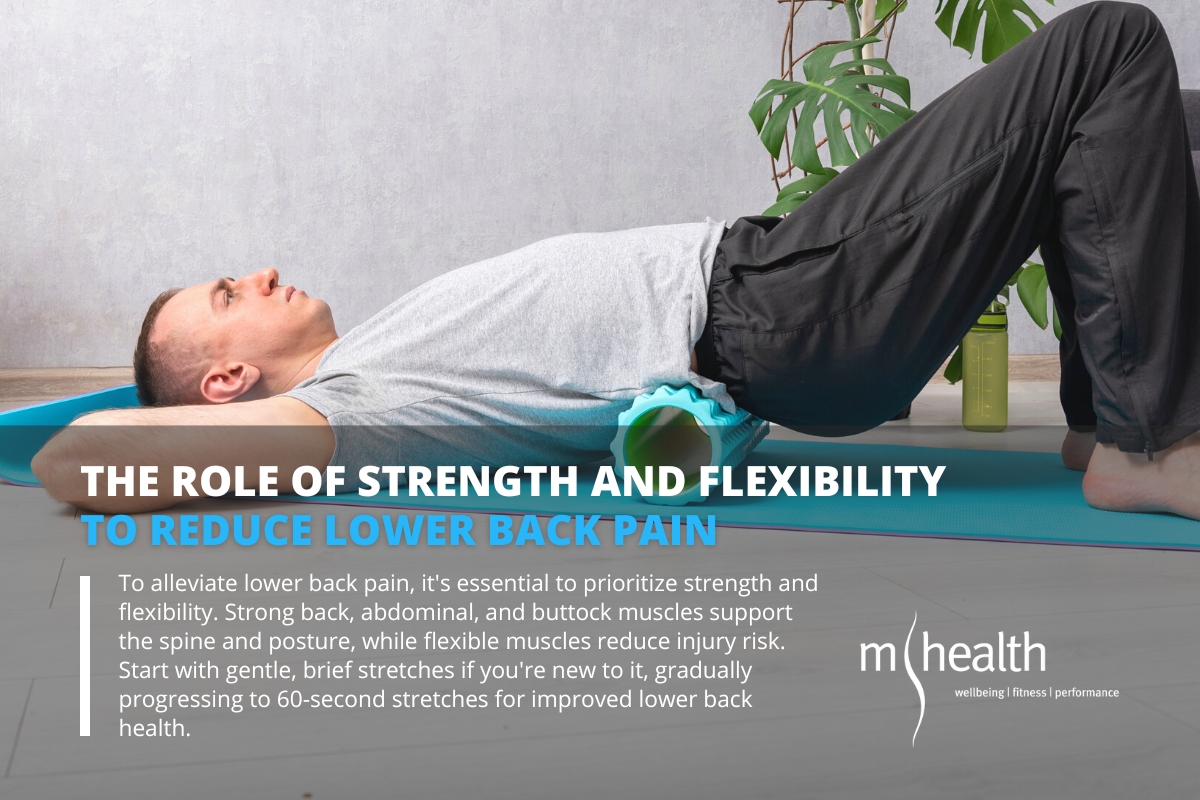
Lower back discomfort can be caused or exacerbated by weak back and abdominal muscles. That is why stretching and strengthening your back and abdominal muscles are vital for relieving low back pain and preventing it from recurring.
Back, abdominal, and buttock muscles should be targeted with a stretching and strengthening routine. Strong abdominal or flexor muscles and strong extensor muscles that span the length of the back aid in maintaining an upright posture.
It is beneficial to strengthen the buttock muscles, which support the back during walking, standing, and sitting, and the two iliopsoas muscles, which run from the lower spine to the hips.
Upper leg muscles must also be strong and flexible since they can strain the back’s supporting structures if they are weak and tight.
Stretching is essential to any therapy strategy for anyone suffering from back pain. Flexible and well-stretched muscles are less prone to injury, whereas less flexible muscles and connective tissues restrict joint motion, increasing the chance of sprains and strains.
Stretching should be done regularly yet gently, without bouncing, as this might cause tissue injury. If you’re not used to stretching, begin by holding a stretch briefly and then progress to 60-second stretches over time.
Physiotherapy treatment for lower back pain
A course of treatment with your physiotherapist can get you out of pain faster than waiting for your back to settle on its own.
Manual therapy combined with specific exercises can be an effective way to manage low back pain. Joint mobilisation, muscle release, massage, and appropriate strengthening and stretching exercises have been shown to reduce pain levels and increase quality of life.
Once the initial level of low back pain has reduced, it is essential to focus on correcting posture and habits that may have led to the problem in the first place. This could involve small changes, such as avoiding sitting too long or developing better core strength. Implementing these strategies in everyday life will help prevent future recurrences from happening.
Furthermore, establishing an ongoing routine that includes stretching and strengthening will build strength and flexibility throughout the body so it can tolerate increased activity more easily without experiencing further low back pains.
Here are some tips for preventing back pain
With a comprehensive physio treatment plan in place, there are many things you can do at home to help manage and reduce lower back pain. The most critical action steps include:
- Maintaining good posture throughout the day; this includes avoiding slouching or leaning too far forward when sitting.
- Taking regular breaks from prolonged sitting or standing to stretch and move.
- Doing regular strength and flexibility exercises to strengthen the muscles that support the lower back and keep them flexible.
- Using a lumbar support cushion when sitting for extended periods to help maintain proper posture and reduce strain on the lower back.
- Keep your core muscles strong with targeted exercises like planks or Pilates movements.
- Managing your weight is one of the most critical steps to conquer lower back pain. Being overweight or obese can put a lot of strain on the spine, leading to increased pain and difficulty with movement. Maintaining a healthy body weight can help relieve some of the pressure and stress on your back muscles and joints.
- Sleep on a firm mattress. Sleeping on your side in the fetal position can help relieve spinal pressure.
- Wear low-heeled, comfy shoes.

Final thoughts on strength and flexibility to conquer lower back pain
By incorporating strength and flexibility exercises into your routine, you can conquer lower back pain and regain control of your life.
Don’t let this pain hold you back any longer. Take the necessary steps to strengthen and stretch your body, and watch as your lower back pain becomes a thing of the past.