You stand up after a long meeting and your hips feel like they belong to someone older. You wake up stiff, and it takes the first few minutes of moving around before things ease. You’ve started skipping the stretches you used to do because you’re not sure which ones still help.
Stiff hips are one of the most common complaints physiotherapists see, and the answer is usually less complicated than people expect. The hip is built for movement, and when it doesn’t get enough of it, the surrounding muscles tighten, and the joint becomes harder to use. Hip stretches done regularly are one of the simplest ways to keep that pattern from setting in. It’s worth checking with a physiotherapist before starting if you have an existing condition or your hips have been giving you trouble lately.
These five stretches cover the main muscle groups around the hip and work for most ages and fitness levels.
Why Hips Stiffen
The hip is one of the most active joints in the body. More than 20 muscles cross it, controlling how you walk, climb stairs, stand up from a chair, and rotate your trunk. When the hip moves regularly through its full range, those muscles stay flexible and the joint stays well lubricated.
The trouble starts when movement drops off. Long days at a desk, long drives, less walking, or a general slowdown after an injury can all leave the hip sitting in a narrow range for hours at a time. The hip flexors shorten in that seated position, and the glutes switch off. Over weeks and months, that imbalance feels like stiffness, and it starts to limit what the joint can do.
For people managing osteoarthritis or joint pain in the hip, the picture is similar but the stakes are a bit higher. Hip OA tends to reduce the range of movement, and without regular movement through that smaller range, stiffness builds faster. Arthritis Australia lists regular activity and gentle stretching among the core self-management strategies.
A Note Before You Start
A gentle pulling sensation in the muscle is what a stretch should feel like. Sharp pain, pinching in the joint, or pain that lingers after the stretch is a sign to back off or change the position. If a particular stretch isn’t comfortable, skip it and try the others.
If you have a current hip injury, recent surgery, or significant pain you haven’t had assessed, a quick chat with a physio first is the safer call. The right modifications make a real difference to what these stretches do for you.
1. Frog Position
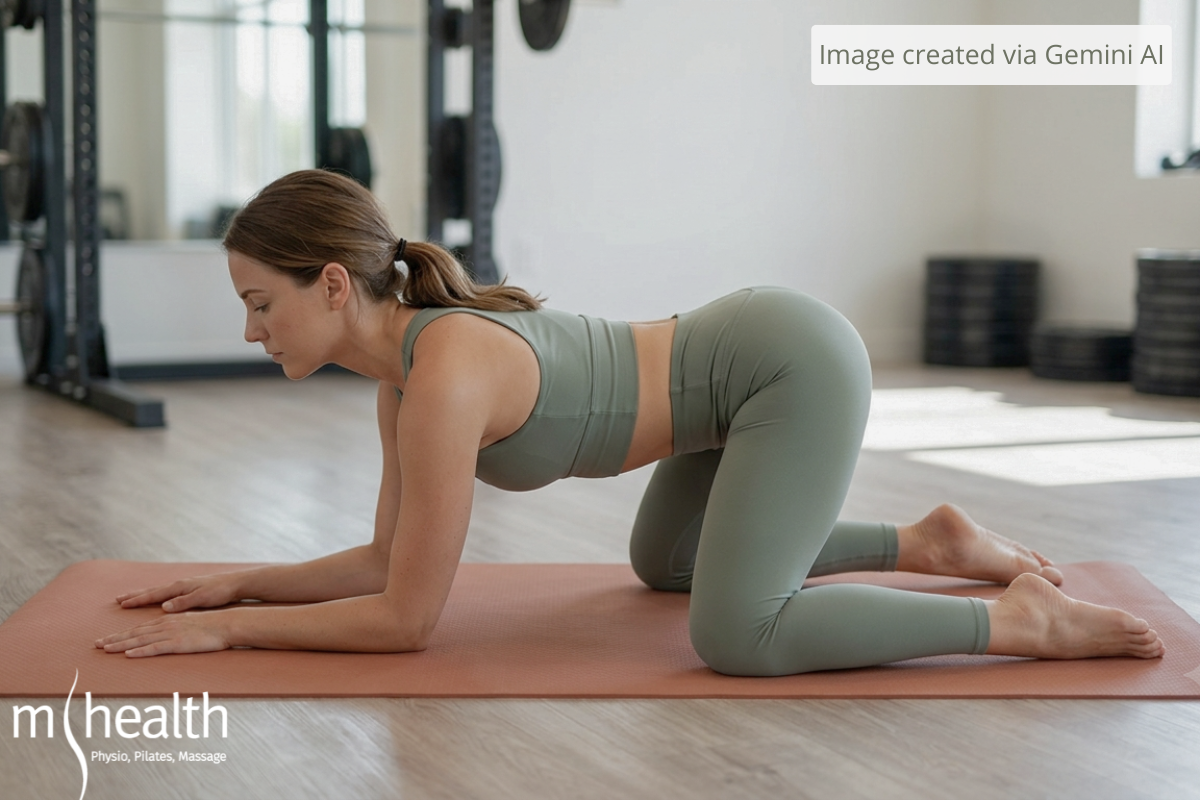
The frog stretch opens the inside of the hips and works on the adductor muscles, which often tighten when the hips stay in one position for too long.
Start on your hands and knees in a tabletop position. Slowly ease your knees outward, away from each other, keeping your shins parallel and your feet pointing out. As your knees move wider, lower your hips down toward the floor and slide your forearms forward so your weight rests on them.
You should feel a stretch through the inner thighs and the front of the hips. Hold for around 10 deep breaths, then ease back to the starting position. If you feel any pinching at the front of the hip, narrow your knees slightly.
2. Supine Stretch With a Strap
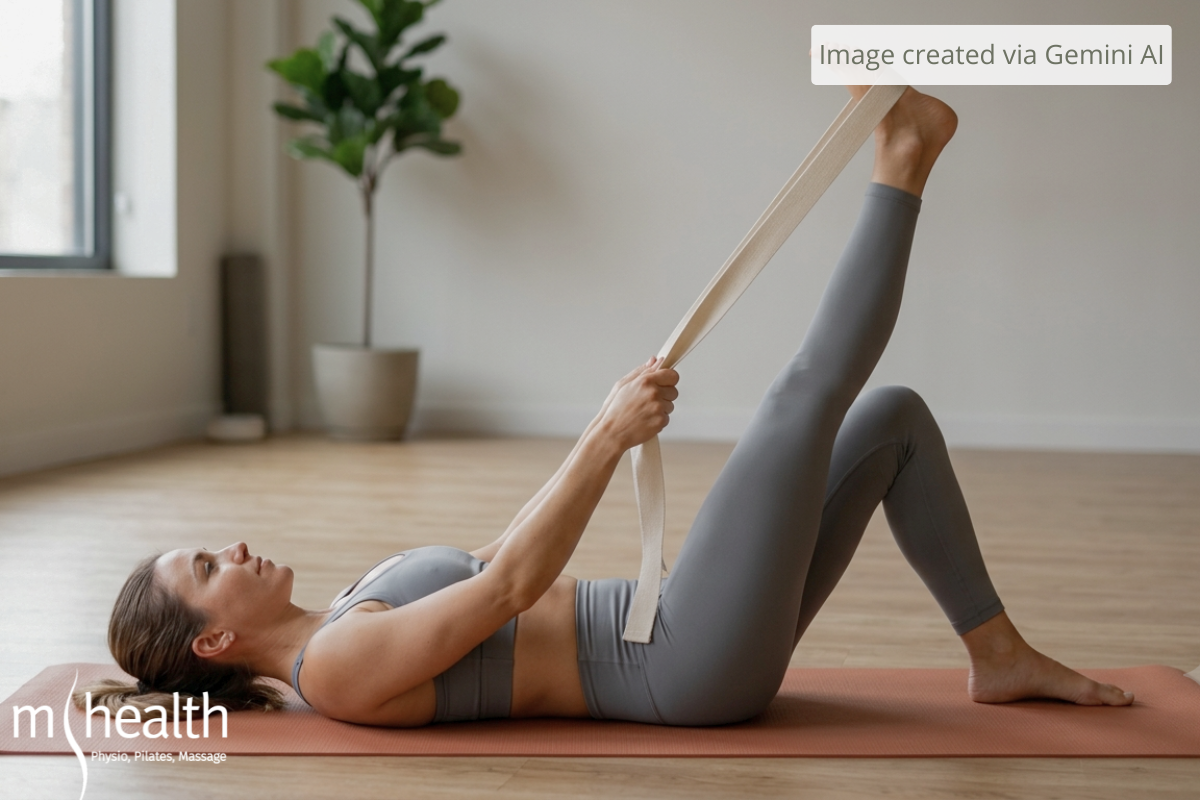
This one targets the hamstrings and the outer hip, both of which often tighten when the body spends a lot of time seated.
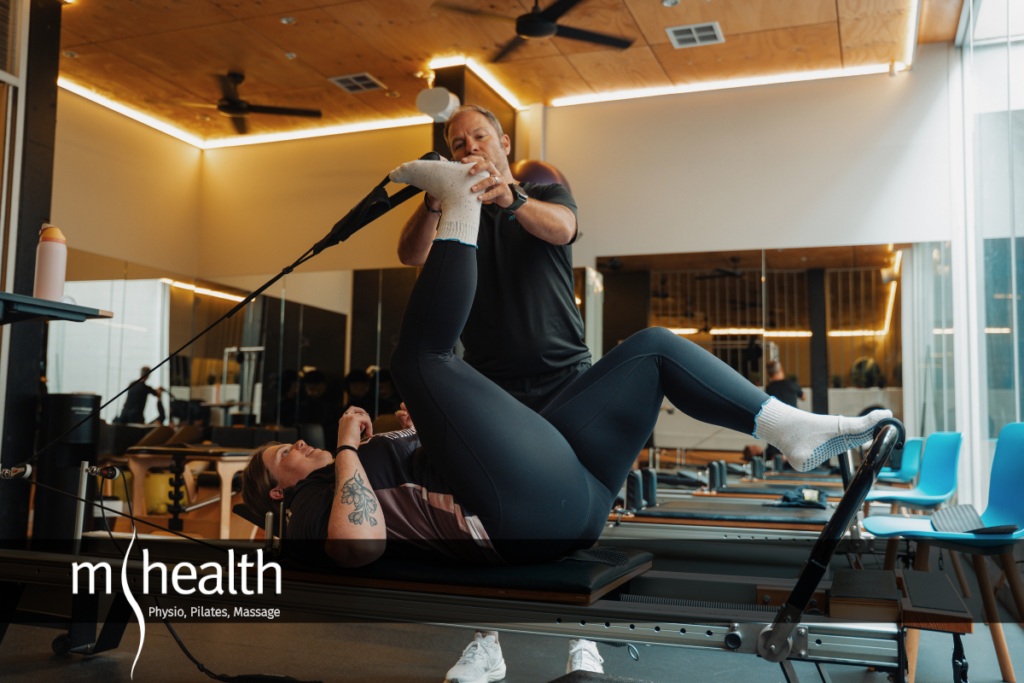
Lie on your back with your legs bent and your feet flat on the floor. Extend your left leg toward the ceiling and loop a strap, towel, or belt around the sole of your foot. Hold both ends.
Slide your right arm out to the side as an anchor, then slowly lower your left leg out to the left side, keeping the left leg straight and the right leg in its starting position. Hold for around 8 deep breaths, then swap sides.
You should feel a steady opening through the inner thigh and the side of the hip. Sharp pulling in the lower back means you’re going too far. Back off until the back feels supported.
3. Lateral Hip Stretch
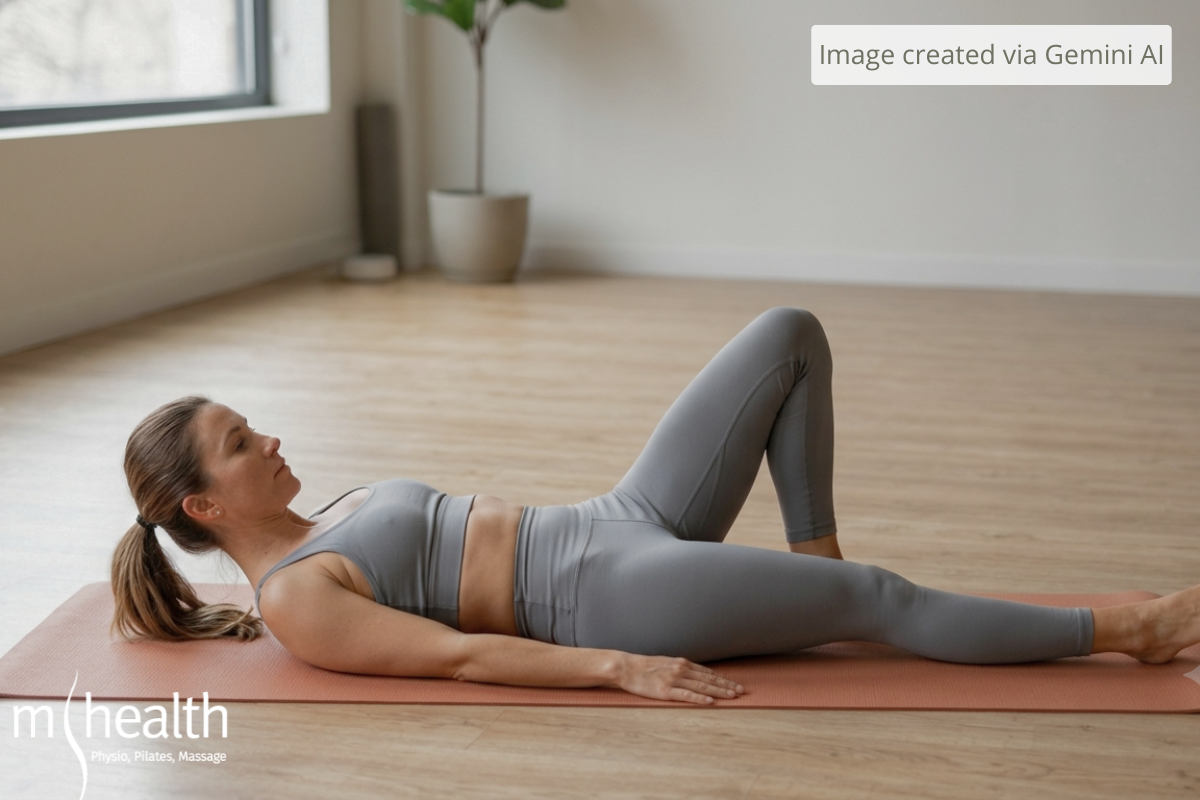
This stretch wakes up the glute muscles, which often switch off after long periods of sitting.
Stay on your back with your right knee bent and your foot flat on the floor. Straighten your left leg. Press through the heel of your right foot and shift your lower body’s weight onto your left hip.
At that position, squeeze the right glute and let your left hip press open. You should feel a stretch through the outer side of the hip and the glute. Pause for a few seconds, then return to the start. Repeat for around eight reps before switching sides.
If the hip clicks or pinches, reduce how far you shift the weight across. Smaller movements with good control are more useful than big movements with strain.
4. Seated Pigeon Stretch
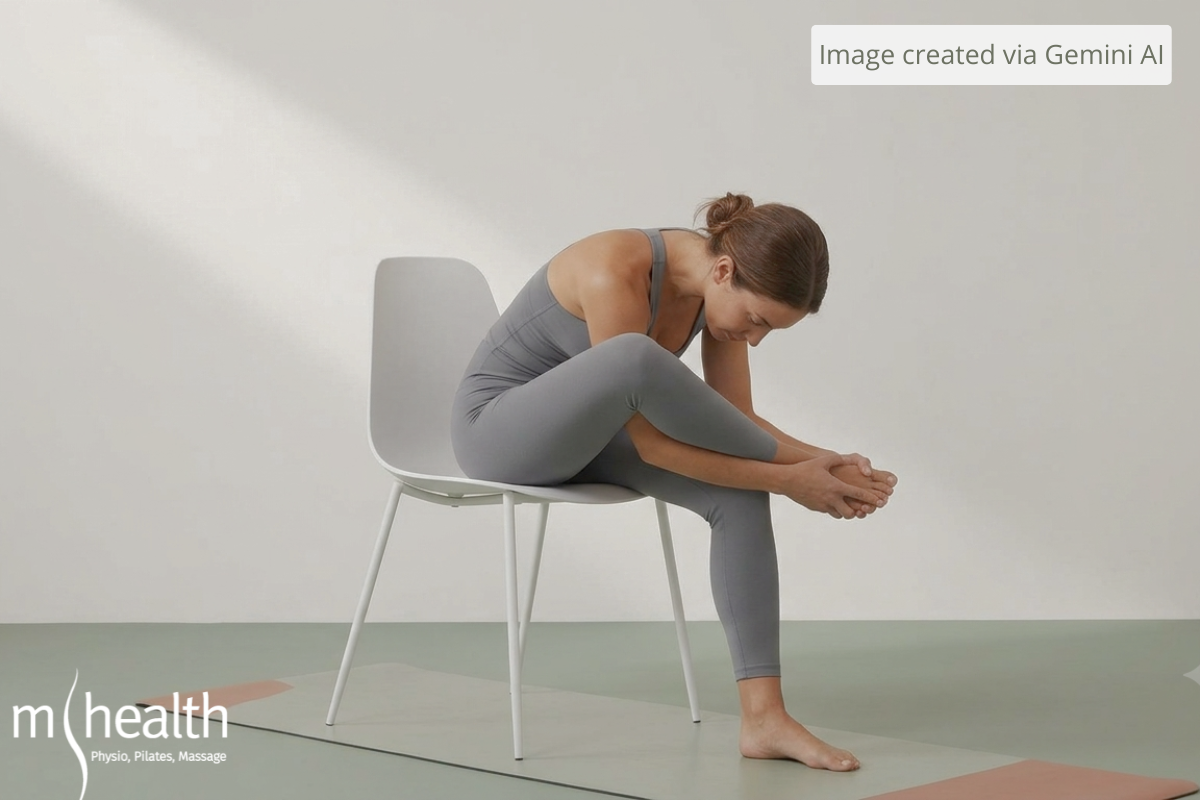
The seated pigeon focuses on the deeper external rotators of the hip, including the piriformis, which is often involved in tight buttock and outer hip pain.
Sit with your knees bent and your feet flat on the floor. Place your left ankle on top of your right thigh just above the knee, and flex your left foot to protect the knee. Lean back on your arms with your hands on the ground behind you.
Gently press your hips forward and downward until you feel the stretch through the right outer hip and glute. Keep your chest open and your back straight rather than rounded. Hold for around 8 breaths, lower, and repeat on the other side.
People with hip OA often find this one more comfortable when they reduce how far they bring the ankle in toward the thigh. Less depth, more control.
5. Hip Flexor Foam Roll
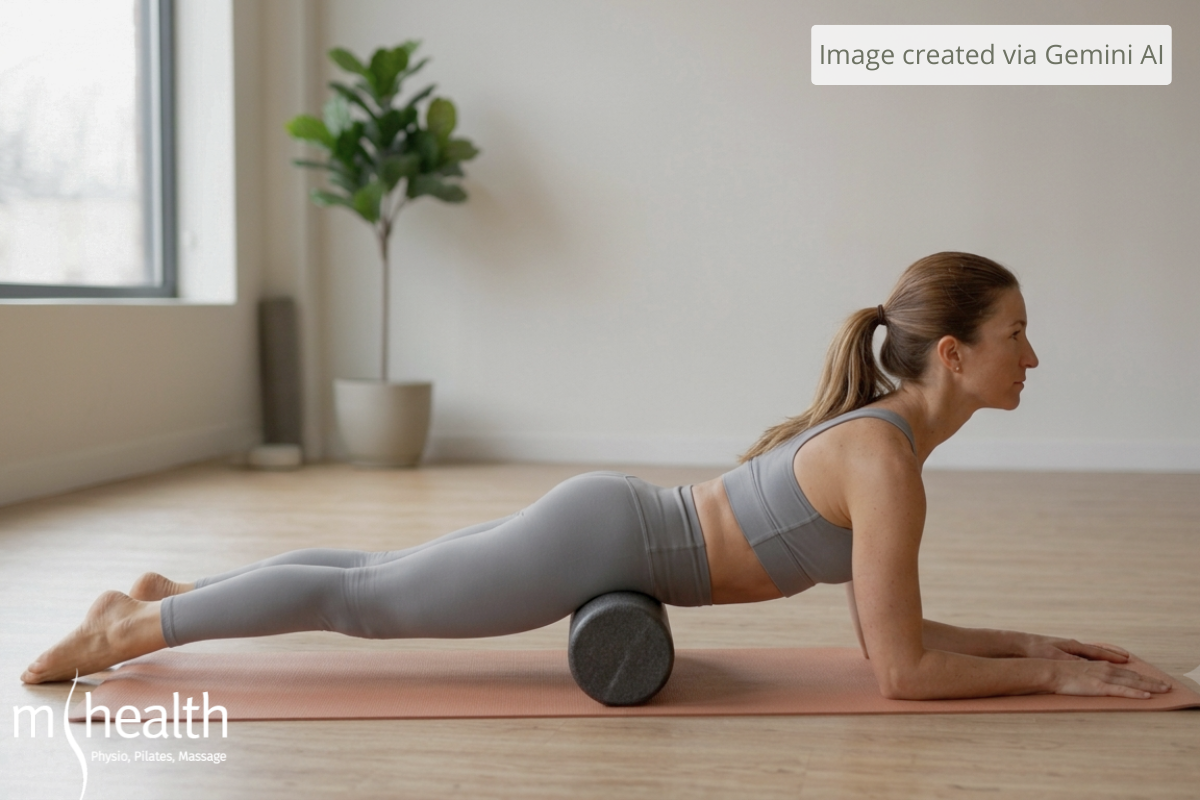
The hip flexors sit at the front of the hip and tighten with prolonged sitting. This one uses a foam roller to release the tissue rather than stretching it directly, which suits people who find static stretches at the front of the hip uncomfortable.
Lie face-down with your forearms on the ground and a foam roller positioned under the front of your left hip. Lean into the roller, keep the rest of your body relaxed, and roll slowly forward and back across a small area for around 30 seconds. Pause on any spots that feel tight.
If a particular point is tender, breathe and stay there rather than gritting through. The aim is to let the tissue release, not force it. Switch sides and repeat.
A foam roller is a useful piece of equipment to keep at home if you’re working on mobility regularly.
When Stretching Isn’t Enough
Stretching alone won’t fix everything. For persistent hip pain that is worsening or affecting your sleep, work, or daily activities, an assessment is the better next step. The same goes for hip stiffness that comes with weakness, locking, giving way, or pain that travels into the groin or down the leg.
The most evidence-based approach for hip pain related to osteoarthritis combines stretching with progressive strengthening, particularly for the glutes and surrounding muscles. Our strength training guide for people over 40 covers that side of the equation. Healthdirect also has useful general information on osteoarthritis self-management.
Hip Stretches And Mobility: Your Questions Answered
| Question | Answer |
|---|---|
| How often should I do hip stretches? | For general mobility and stiffness, a short hip-stretching routine three to five times a week is usually enough to notice a difference. Daily stretching is fine if you’re managing more significant stiffness. Consistency matters more than long sessions. Five to ten minutes done often beats an hour once a fortnight. |
| Can stretching help with hip osteoarthritis? | Yes. Regular gentle stretching is one of the recommended self-management strategies for hip OA, alongside aerobic activity and progressive strengthening. The goal is to keep the joint moving through its available range. Stretches should be comfortable rather than forced, and combined with strength work for the best results. |
| What causes stiff hips? | The most common cause of stiff hips is reduced movement through the day, especially long periods of sitting. The hip flexors shorten and the glutes switch off, which feels like stiffness. Other causes include osteoarthritis, post-injury changes, muscle tightness from sport or work, and reduced general activity levels. |
| Are hip stretches safe for older adults? | Yes, gentle hip stretches are appropriate at any age and are particularly valuable for older adults, where stiffness and reduced range of movement are common. Modifications might include using a wall or chair for support and reducing the depth of each stretch. A physio can tailor the routine if you have a specific condition. |
| Should hip stretches hurt? | No. A gentle pulling sensation through the muscle is normal. Sharp pain, joint pinching, or pain that lingers after the stretch is a sign to back off or change the position. Stretches should feel like a release, not a strain. |
| When should I see a physio about hip pain? | See a physio if hip pain is persistent, getting worse, or affecting your sleep, work or activity. Pain that comes with weakness, locking, giving way, or symptoms travelling into the groin or leg also warrants an assessment. Stretching alone is rarely enough for hip pain with a structural driver. |
Final Thoughts
Hip stiffness builds quietly, often over months or years, and it tends to return when the routine drops off. A handful of stretches done a few times a week is usually enough to keep the joint moving comfortably and reduce the everyday tightness that comes with a desk-heavy lifestyle.
If hip pain or stiffness is part of a bigger picture, like ongoing joint pain or a known condition, our Osteoarthritis and Joint Pain page explains what’s involved and how it’s managed.
Book an Assessment
If your hips have been bothering you for a while, or you’re not sure which stretches and exercises suit your body, book an assessment with the team at mHealth in Mentone. Our physiotherapists will check what’s contributing to the stiffness and put together a plan you can actually stick with. Book online or call (03) 8585 2222.