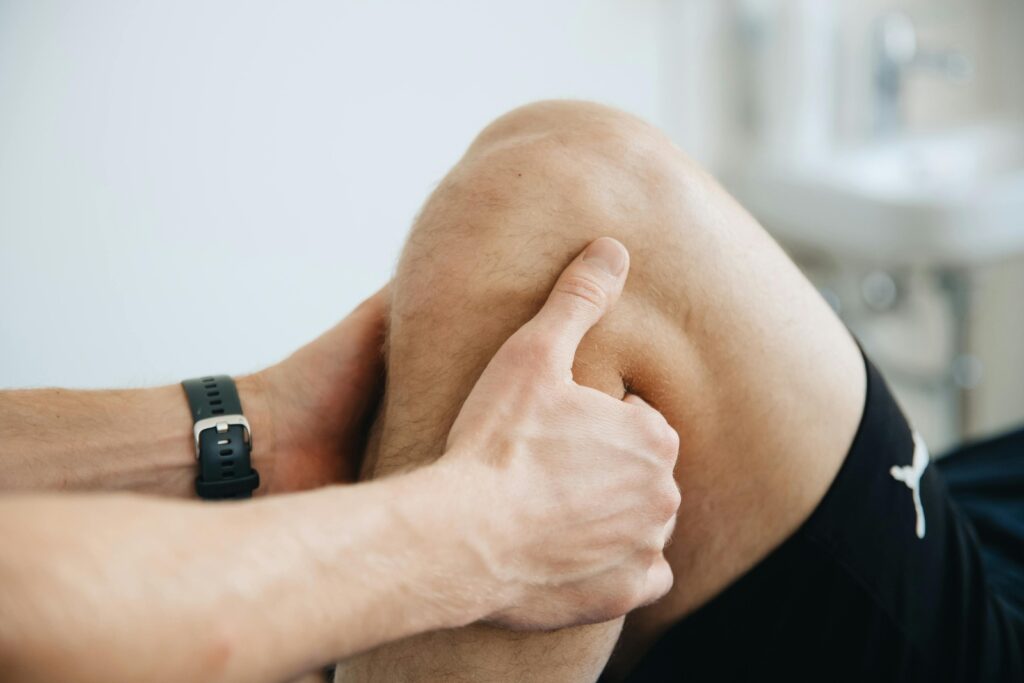

Knee Pain Support at mhealth

Knee Pain

Knee pain is one of the most common reasons people visit a physiotherapist in Australia, and one of the most mismanaged. The default advice is often rest, ice, and wait it out. For many people, that approach doesn’t work, and pain either lingers or keeps coming back.

The knee is a load-bearing joint. It’s built to move, to absorb force, and to carry you through sport, work, and daily life. When something goes wrong, the solution is rarely to stop loading it altogether. Load it better.

At mhealth in Mentone, we assess what’s actually driving your knee pain, not just where it hurts. That means looking at the knee itself, but also at the hip above and the ankle below, because how load travels through the entire lower limb shapes what happens at your knee. Once we understand what’s going on, we build a plan that gets you back to doing what matters.

What Is Knee Pain and What Are the Common Symptoms?

Knee pain is not a diagnosis. It is a symptom. Musculoskeletal conditions affect around 7.3 million Australians and the knee is one of the most commonly affected joints across all age groups. The causes range from acute injuries in sporting populations to degenerative changes in older adults, to load-related overuse issues in runners and gym-goers. Getting the right diagnosis early is what allows treatment to be targeted and effective.

Common Symptoms of Knee Pain

The experience of knee pain varies considerably depending on what’s causing it. Common presentations we see at mhealth include:

  • Pain around or behind the kneecap, particularly on stairs, squatting, or after prolonged sitting
  • Pain at the front of the knee below the kneecap that worsens with jumping, running, or heavy loading
  • Inner (medial) or outer (lateral) joint line pain, often with stiffness after rest
  • Knee pain when bending fully, or when straightening the knee after being seated
  • Swelling or a feeling of fullness around the knee joint
  • Clicking, catching, or occasional locking in the knee
  • Pain and stiffness first thing in the morning that eases with movement
  • Knee pain when walking, particularly on uneven ground or inclines

Common Types and Causes of Knee Pain

Knee pain can have many causes, from activity-related conditions and sporting injuries to age-related joint changes. Understanding the type and pattern of your pain can help determine the most appropriate treatment approach.

Patellofemoral pain is typically felt around or behind the kneecap and is aggravated by activities that load the knee, such as stairs, squatting, running, cycling or sitting for long periods. It is common in active people of all ages and can be influenced by changes in strength, movement and training load.

Patellar and quadriceps tendinopathy causes localised, load-related pain in the tendons below or above the kneecap. It is particularly common in jumping and running sports, or after a rapid increase in training. Progressive strengthening and appropriate load management are key components of treatment.

Knee osteoarthritis involves changes to the cartilage, bone and other structures within the knee joint. It can cause aching, stiffness and pain that often worsens with sustained activity or towards the end of the day. It is more common with increasing age, although previous injuries can also contribute.

Meniscal injuries and degenerative meniscal changes cause pain along the joint line, often with stiffness, clicking, and sometimes a catching sensation. Acute meniscal tears typically occur with a twisting mechanism under load. Degenerative changes are more gradual and age-related. Both presentations can be managed effectively with physiotherapy in many cases.

Ligament injuries such as ACL, MCL and LCL injuries commonly occur through contact, twisting or landing forces during sport. ACL injuries can cause a pop, rapid swelling and instability, while MCL injuries more commonly cause pain and tenderness on the inner side of the knee.

Adolescent knee pain can occur during periods of rapid growth, particularly in active teenagers. Conditions such as Osgood-Schlatter disease can cause pain and swelling around the tibial tuberosity below the kneecap. Managing training loads while maintaining appropriate strength is often an important part of recovery.

Other contributing factors can influence how knee pain develops and persists. Changes in hip or ankle strength and mobility, previous injuries, sudden increases in training volume or intensity, and reduced single-leg control can all affect how load is distributed through the knee.
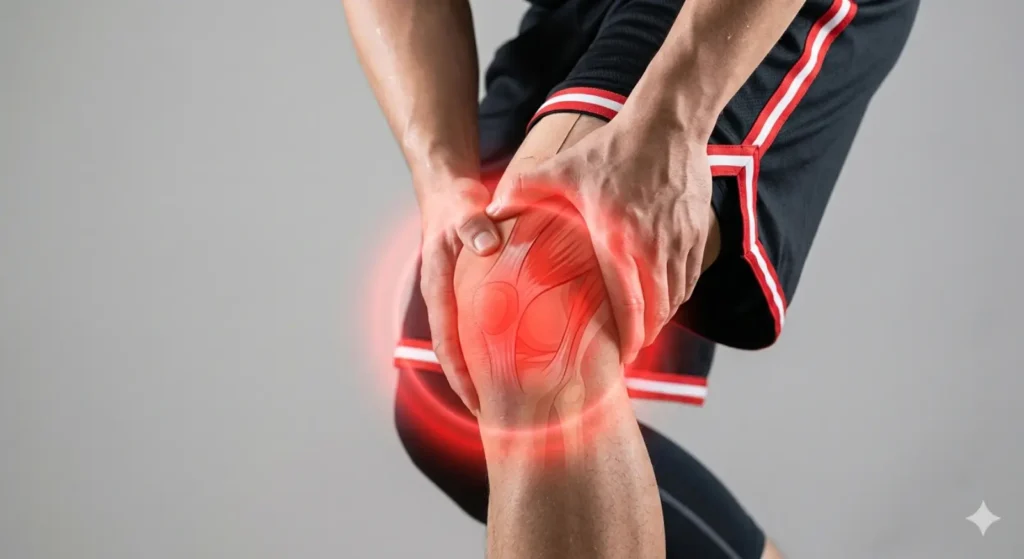
Pain Is Not the Same as Damage

This matters more for knee pain than almost any other joint.

A scan can show a torn meniscus, cartilage thinning, or tendon thickening, and that person might have no pain at all. Another person can have severe knee pain with very little visible on imaging. The relationship between what a scan shows and how much pain you’re in is weak, and this shapes how we approach management.

Research from the Journal of Orthopaedic and Sports Physical Therapy recommends exercise, education, and load management as the primary treatment for patellofemoral pain: not imaging, not passive treatment, and not rest. The same principle holds for tendinopathy, knee osteoarthritis, and most degenerative knee changes.

What does help is understanding what your knee is currently capable of tolerating, and building from there. The knee responds well to progressive loading. Most conditions that cause knee pain improve when load is managed correctly and strength around the joint is built consistently over time.

Frequently Asked Questions About Knee Pain

Should I rest my knee if it hurts?

Short periods of relative rest can help settle an acute flare, but prolonged rest is rarely the answer. Avoiding load weakens the muscles around the knee, reduces tendon capacity, and tends to make symptoms worse over time. The goal is to find a level of activity your knee can tolerate and build from there. Your physiotherapist can help you work out what that threshold is.
Not always. Many knee conditions are diagnosed accurately through clinical assessment alone, taking a thorough history, testing strength and range of motion, and assessing how the knee responds to specific movement patterns. Scans can be helpful in confirming a diagnosis or ruling out serious pathology, but imaging findings don’t always reflect how much pain you have or how well you’ll respond to treatment. Your physio will advise whether imaging adds meaningful information in your case.
In most cases, yes, with some modification. The type of exercise, the load, and the volume may need to be adjusted, but continuing to move is almost always better than stopping entirely. Activities like cycling, swimming, and resistance training with appropriate load can often be maintained even during a painful episode. Your physiotherapist will help you identify what aggravates the knee and what it can tolerate.
For most people, no. The majority of knee conditions (patellofemoral pain, tendinopathy, meniscal changes, and knee osteoarthritis) respond well to structured physiotherapy and progressive exercise without surgical intervention. Surgery is appropriate for specific presentations, such as complete ACL tears in high-demand athletes, or end-stage osteoarthritis where conservative management has been exhausted. Your physiotherapist can help you understand where your condition sits in that spectrum.
Stairs increase the force through the patellofemoral joint substantially compared to flat walking. If your kneecap isn’t tracking well, or if the muscles controlling the joint are weak or fatigued, stairs are often the first activity to become painful. Pain specifically on descent (coming down stairs) is particularly characteristic of patellofemoral pain.
Not necessarily. Age is a risk factor for some knee conditions, but it’s not a sentence. Strength and activity are protective for knee health across all age groups. Many people manage chronic knee conditions extremely well through consistent exercise, load management, and regular physiotherapy. The trajectory is shaped more by what you do than by how old you are.
Most knee pain is musculoskeletal and manageable. Seek prompt medical review if you notice significant swelling with heat and redness (particularly with fever), if your knee gave way completely and you can’t bear weight, if pain followed a high-force injury and is severe, or if you have unexplained weight loss alongside joint pain. These presentations warrant investigation beyond physiotherapy.

References

  1. Australian Institute of Health and Welfare (2024). Chronic musculoskeletal conditions. AIHW national health report.
  2. Willy RW et al. (2019). Patellofemoral Pain: Clinical Practice Guidelines Linked to the International Classification of Functioning. Journal of Orthopaedic and Sports Physical Therapy, 49(9).
  3. Cook JL, Purdam CR. (2015). Patellar Tendinopathy: Clinical Diagnosis, Load Management, and Advice for Challenging Case Presentations. Journal of Orthopaedic and Sports Physical Therapy, 45(11).
  4. Beyer R et al. (2015). Heavy slow resistance versus eccentric training for Achilles and patellar tendinopathy. British Journal of Sports Medicine.
  5. Australian Physiotherapy Association. Patellofemoral pain (knee cap pain). Choose Physio patient resource.
  6. Royal Australian College of General Practitioners. Exercise for knee osteoarthritis. HANDI clinical guidelines.

Knee Pain Articles

How mhealth Treats Knee Pain

Exercise-based rehabilitation is the most supported treatment approach for knee pain across virtually every clinical guideline. The Australian Physiotherapy Association and the RACGP both recommend targeted exercise and education as first-line management: not passive treatment, not extended rest. Our team at mhealth builds programs grounded in that evidence, tailored to what’s actually going on with your knee.

Assessment: Finding What's Actually Driving Your Pain

Your care at mhealth starts with a thorough assessment. We look at the knee itself (range of motion, joint mechanics, pain behaviour, and tissue loading tolerance) but we also assess the hip and ankle, because both have a significant influence on what happens at the knee.

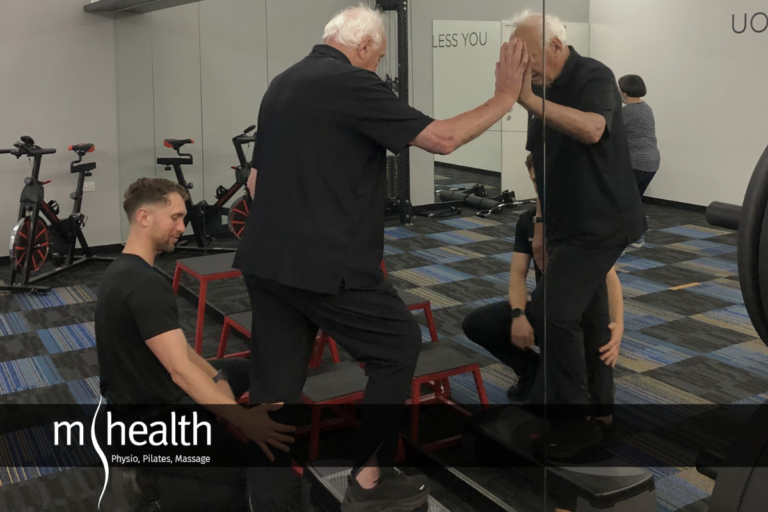
For load-related conditions like tendinopathy, we assess strength, single-leg control, and tendon reactivity. For patellofemoral pain, we look at kneecap tracking, quadriceps and glute function, and movement patterns during activities like squatting and step-ups. For post-injury presentations, we assess joint stability, strength symmetry, and functional capacity.

Where appropriate, we use our AXIT strength assessment system to capture objective strength data, track progress, and give you clear benchmarks to work toward. Understanding where the gaps are is what makes the program specific to you, not a one-size-fits-all template.

Strengthening the muscles around the knee is the single most important thing you can do for the majority of knee conditions. Quadriceps strength is central to patellofemoral and osteoarthritis management. Glute strength improves single-leg control and reduces valgus knee stress. Calf loading is critical in tendinopathy rehabilitation. The goal is to progressively build the capacity of the muscles to absorb and distribute force, protecting the joint itself in the process.

We use a mix of bilateral and single-leg exercises depending on where you are in your rehabilitation. Bilateral work (squats, leg press, deadlift variations, hip thrusts) builds overall lower limb strength. Single-leg work (step-ups, single-leg squats, single-leg Romanian deadlifts, lateral movements) trains the specific control and stability demands of sport, work, and daily life. Both matter.

For patellar and quadriceps tendinopathy, the rehabilitation approach is structured differently from general strengthening. Tendons respond to load in a specific way, and the program needs to reflect that.

In the early stages, isometric loading (holding a muscle contraction without movement) provides pain relief and begins building tendon tolerance. As symptoms settle, we progress to slow heavy resistance work, then to more dynamic, energy-storage exercises like hop and landing mechanics. Research supports this staged approach as superior to rest or isolated eccentric programs alone.

A key principle: some discomfort during tendon loading is acceptable and expected, provided it settles within 24 hours. Pain that lingers the next day indicates the load needs adjusting. We monitor this closely and progress the program based on your response.

Hands-on treatment can play a useful role in the early stages of knee rehabilitation or during a flare-up, when pain is limiting your ability to participate in exercise. At mhealth, this includes:

Soft tissue therapy and massage to reduce muscle tension and guarding around the knee and associated regions.

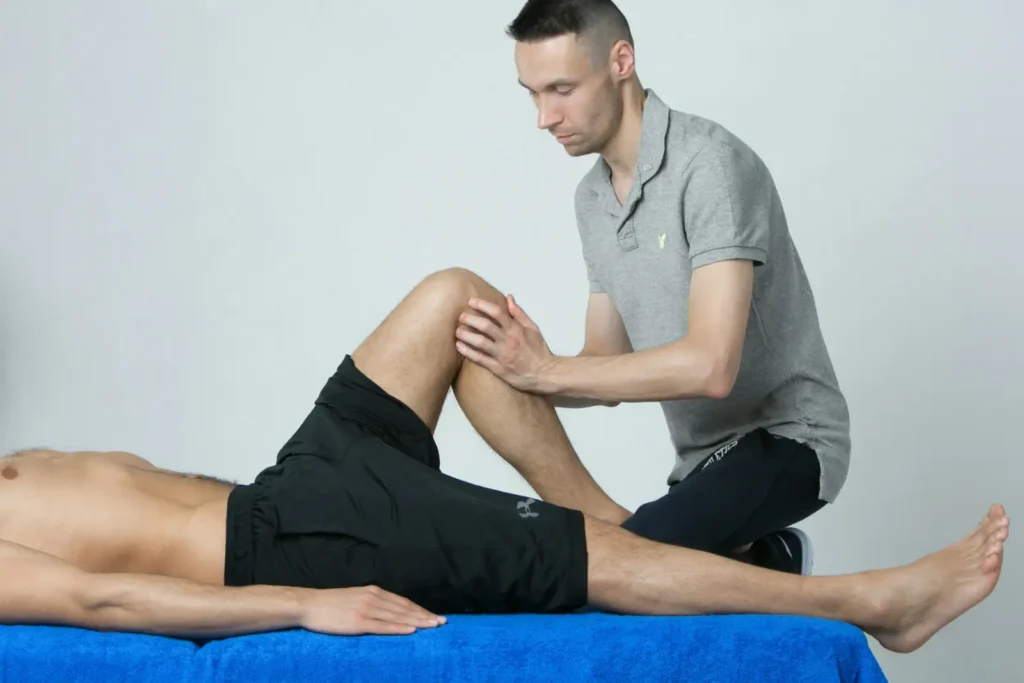
Joint mobilisations applied to the knee, patellofemoral joint, or contributing joints to improve range of motion and reduce pain.

Patellar taping to offload or guide the kneecap during activity, particularly useful in patellofemoral pain to allow better participation in exercise while strength is being developed.

Dry needling to address tight or overactive muscles that are contributing to altered load patterns at the knee.

Hands-on therapy is an adjunct, not the primary driver of recovery. It works best when it reduces the barrier to exercise participation. Your program at mhealth will be built around active rehabilitation, with hands-on treatment supporting that process where it adds genuine value.

Load management is as important as the exercise itself. One of the most consistent patterns behind knee pain is a spike in training load: too much volume, too much intensity, or a sudden change in activity that the knee hasn’t had time to adapt to.

We work with you to understand your current training and daily activity demands, identify where the load spike occurred, and build a graduated return plan. For runners, this means structured running progressions. For gym-goers, it means understanding how to modify movements and progress load without aggravating the knee. For people with occupational demands, it means practical strategies for managing load across the day.

For those working back toward sport, running, or high-level physical activity, our return-to-activity programs address the specific demands of what you’re returning to. This includes running progressions for distance and trail runners, jumping and landing mechanics for court sports, and strength testing benchmarks to guide decision-making about when you’re genuinely ready, not just pain-free.

Returning before the knee has the strength and reactive capacity to meet those demands is one of the most common reasons people re-injure. We take this phase seriously and don’t rush it.

Who Is Most at Risk of Knee Pain?

Modifiable risk factors:

  • Weakness in the quadriceps, glutes, or calf muscles
  • Reduced ankle mobility, which affects squat mechanics and lower limb loading patterns
  • Rapid spikes in training load, running volume, or activity intensity
  • Sedentary behaviour followed by sudden periods of high activity
  • High body weight, which increases the load on weight-bearing joints, particularly relevant in knee osteoarthritis
  • Occupational demands involving kneeling, stairs, heavy lifting, or prolonged standing

Non-modifiable risk factors:

  • Previous knee injury, including ligament tears, meniscal damage, or fractures near the joint
  • Age, which is associated with degenerative changes in cartilage and tendons
  • Adolescent growth spurts, which increase the risk of traction apophysitis (Osgood-Schlatter disease) in active teenagers
  • Family history of knee osteoarthritis

The encouraging reality is that the modifiable factors (strength, load, movement quality) respond well to targeted physiotherapy. Building capacity through progressive training is one of the most powerful things you can do, at any age.

What You Can Do Between Appointments

What happens between sessions shapes your recovery just as much as the treatment itself.

Keep moving, but manage the load. Total rest rarely helps and often makes things worse. Staying active, even when you need to modify how you exercise, maintains strength, joint health, and confidence in the knee. Cycling, swimming, and pool walking are good options when land-based activity is irritating.

Build and maintain lower limb strength year-round. Strength is protective. Two to three strength sessions per week, maintained consistently over months and years, reduces the risk of knee pain recurring. The goal isn't to train hard when you're in pain and stop when you feel better. It's to make strength work a permanent part of your routine.

Avoid sudden load spikes. If you've taken time off, resist the urge to return to full training immediately. Build back gradually. Most overuse knee injuries start with a period of increased training without adequate recovery. Gradual progression protects the tendon and joint from the load changes they haven't had time to adapt to.

Wear appropriate footwear for your activity. Footwear affects load distribution through the entire lower limb. Running in worn-out shoes, or using footwear that isn't suited to your activity, can contribute to altered mechanics at the knee. Your physiotherapist or podiatrist can advise on what's appropriate for your presentation.

Manage body weight where relevant. Even a modest reduction in body weight can reduce the load through the knee joint substantially, particularly in osteoarthritis. Combining regular activity with a nutritious diet supports both joint health and muscle development. Strength training is valuable regardless of body weight. It shouldn't wait until weight loss has occurred.
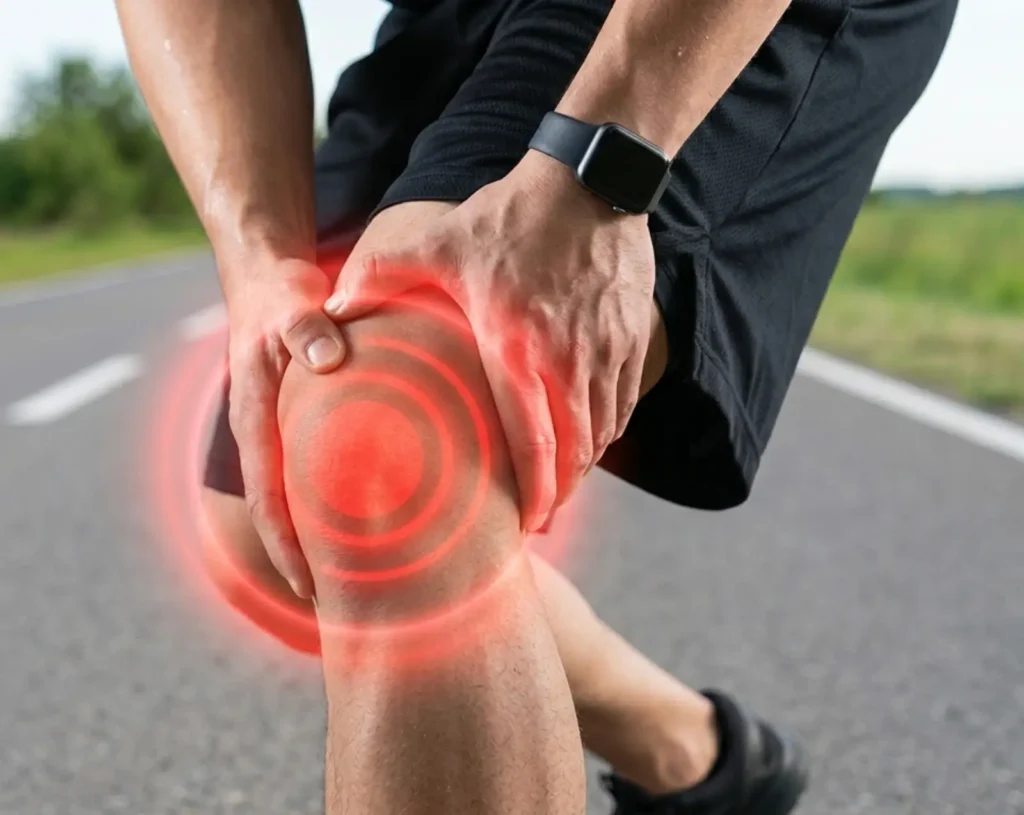
When to See a Physio for Knee Pain

Book an assessment if you are experiencing:

  • Knee pain that has persisted for more than one to two weeks without improvement
  • Symptoms that are limiting your ability to exercise, get through work, or manage daily tasks
  • Knee pain that keeps coming back after settling, particularly with the same activities
  • Reduced confidence in the knee, including a sense of instability, giving way, or not trusting it under load
  • A significant increase in swelling or pain following a change in training or activity

You don’t need a GP referral to see a physiotherapist in Australia.

When It May Be Something Else

Most knee pain is musculoskeletal and responds to physiotherapy management. Seek prompt medical assessment if you experience:

  • Significant swelling with heat and redness, particularly alongside a fever, which may indicate septic arthritis or an inflammatory flare
  • Severe pain and swelling following a high-force injury with inability to bear weight
  • A loud pop at the time of injury with immediate instability, which may indicate an ACL tear
  • Knee pain alongside unexplained weight loss or systemic symptoms

These presentations require medical investigation before physiotherapy management begins.

Get Support for Knee Pain

Physiotherapists Mentone

If knee pain is holding you back (from training, from work, from the activities you enjoy) the right support makes a real difference. Most knee conditions respond well to physiotherapy, and the sooner you understand what’s driving your symptoms, the faster you can start building back.

mhealth is located in Mentone and services the surrounding suburbs including Beaumaris, Parkdale, Black Rock, Sandringham, Cheltenham, Mordialloc, and Chelsea. Book an appointment with mhealth or contact our team to find out how we can help.

Not Sure If This Is the Right Page?

You don’t need a confirmed diagnosis to book an appointment. If you’re experiencing shoulder pain, stiffness, or difficulty moving your arm and aren’t sure what’s causing it, our team can assess your symptoms and guide you towards the right next step.