You want to keep your bones strong as you get older, but the exercises that build bone often feel like they’re picking a fight with the joints you already know don’t love certain movements. It’s a common tension, and it usually resolves once you understand what bones actually respond to and how to build the load without pushing through the wrong kind of pain.
How to improve bone strength comes down to two things: giving bones a reason to stay strong through weight-bearing activity and progressive muscle loading, and doing it in a way your joints can tolerate. This guide covers what actually works, why it works, and how to adjust the plan if joint pain or a previous injury has kept you cautious about training.
Why Bone Strength Matters at Any Age
Bones aren’t static. They’re living tissue that adapts to the demands placed on them, laying down more bone where load is applied and losing bone from areas that get little use. That’s why exercise builds bone density in a way no supplement or diet can on its own.
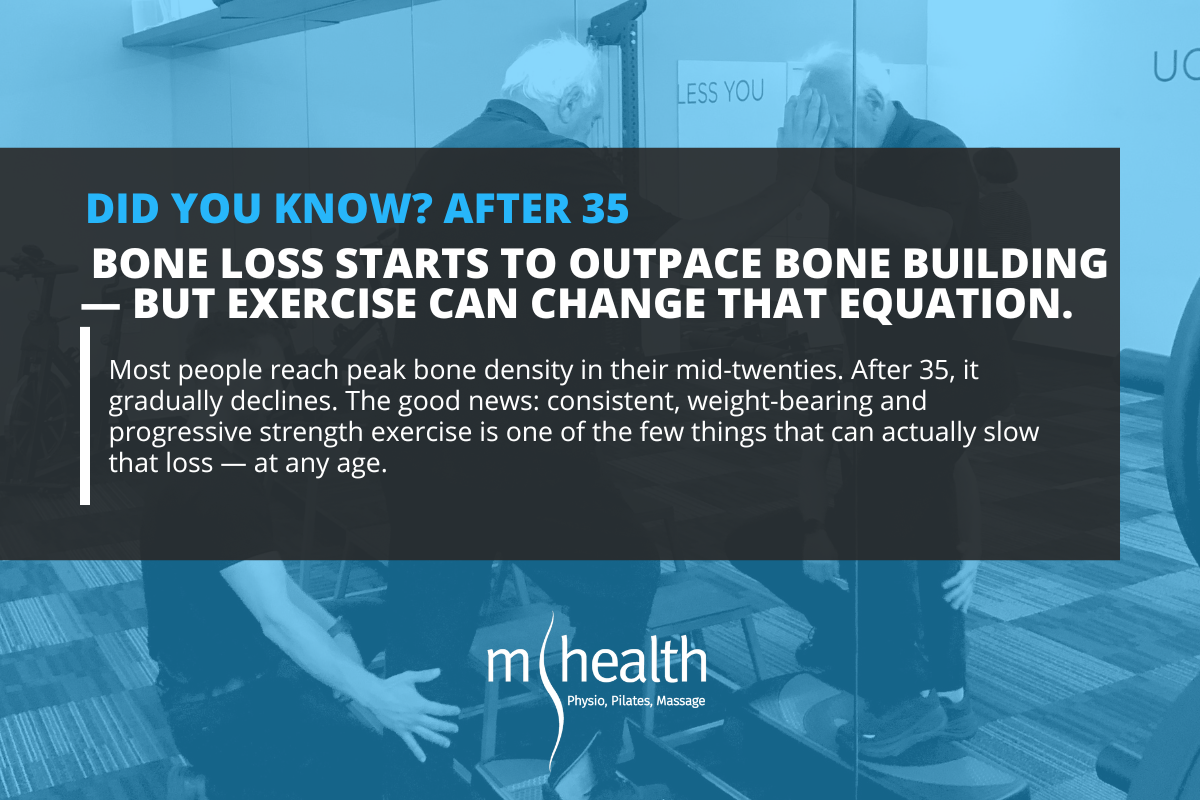
Bone mass peaks in your late twenties and starts to gradually decline from around age 35, accelerating after menopause for women and continuing across later life for both sexes. The good news is that this decline can be slowed, and in some cases partially reversed, by consistent weight-bearing and resistance exercise. Healthy Bones Australia lists exercise as one of the core lifestyle factors for maintaining bone health at any age.
The point matters most later in life because low bone density increases fracture risk, and hip and spine fractures are among the leading causes of loss of independence in older Australians.
Weight-Bearing Exercise Is the Foundation
Weight-bearing exercise is anything you do standing where your legs support your body weight. Walking, dancing, jogging, stair climbing, hiking, tennis and even brisk gardening all qualify. The load doesn’t have to be heavy. What matters is that the bones are being asked to hold weight against gravity in a repeated, rhythmic way.
For people who are new to training, or coming back after a break, walking is the most accessible starting point. Aim for regular sessions across the week rather than one long walk once. Consistency is where bone benefit accumulates. If you can tolerate higher-impact activity like jogging or dance, that provides a stronger stimulus, but it isn’t essential to see benefit.
Non-weight-bearing exercise like swimming and cycling is still valuable for cardiovascular fitness and joint mobility, but it doesn’t build bone in the same way. If bone density is a priority, weight-bearing activity has to be part of the mix.
Strength Training and Its Role
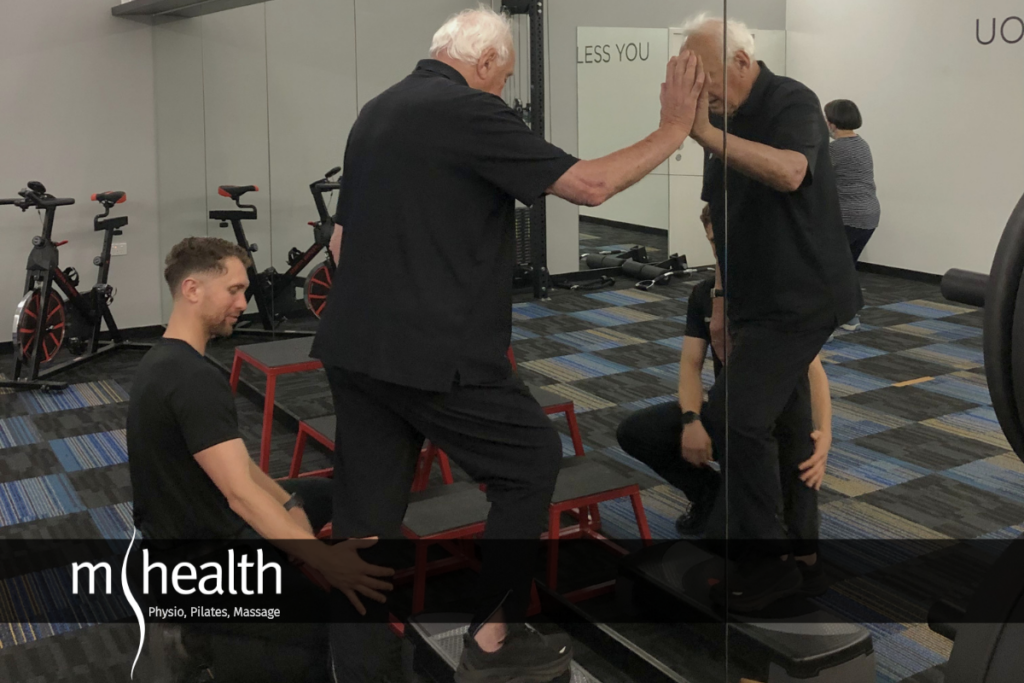
Strength training builds bone through a different mechanism. When muscles pull hard on their bony attachment points, the bones respond by strengthening at those attachments. That’s why resistance exercise, particularly at moderate to heavy loads, is one of the most effective interventions for bone density.
Practically, this means two to three sessions per week of exercises that meaningfully challenge major muscle groups. Squats, deadlifts, lunges, overhead presses, rows, and step-ups all fit the bill. You don’t need a barbell or a gym membership. Resistance bands, dumbbells, or bodyweight loaded into difficult positions all work if the effort is high enough.
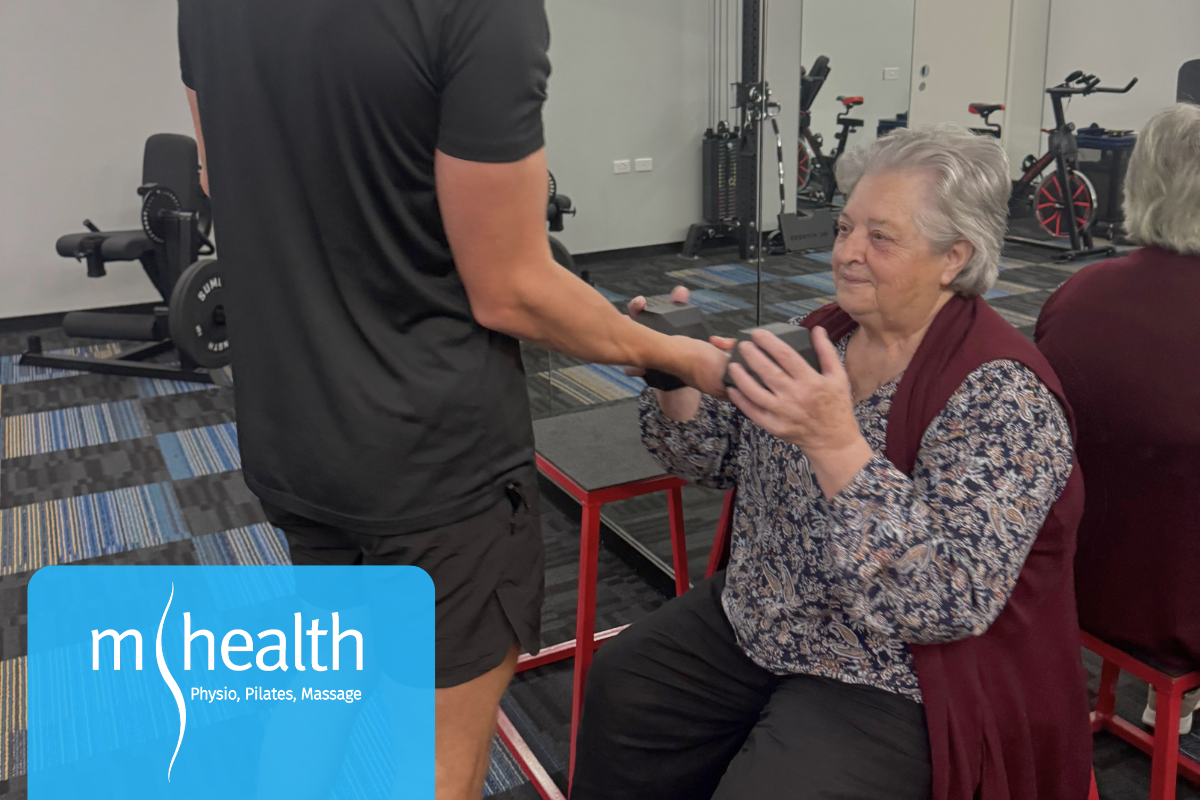
Load is where progress lives. Starting with what feels manageable and gradually increasing over weeks and months is what drives the adaptation. Our strength training guide for people over 40 covers this in more detail, and mHealth’s strength and conditioning classes are one option if you’d rather train with a physio’s eye on your form.
Bone Strength and Joint Health Work Together
Here’s the piece the standard bone-density conversation often misses: the exercises that build bone are also the exercises that support joint health, including for people with knee or hip osteoarthritis. Weight-bearing activity and progressive strength training both apply the kind of controlled load that keeps joints healthy alongside bones.
The approach used for osteoarthritis and joint pain management leans on the same principles: strengthening the muscles around the affected joint, gradually loading the joint through its useful range, and moving consistently across the week rather than in bursts. The training goals overlap even when the primary target is bone rather than cartilage.
For people carrying both bone density concerns and joint symptoms, this is genuinely good news. One training plan can serve both, provided it’s built around what your joints tolerate and progressed carefully.
Gentle Options When Pain Is a Barrier
Some people can’t jump straight into weight-bearing exercise or heavier loading. Recent injury, ongoing joint pain, poor balance, or a flare-up of an existing condition are all reasons to start smaller and build up.
Seated exercises can bridge the gap. Chair-based movements like seated marches, ankle rotations, calf raises against a wall, and gentle upper-body twists still generate useful muscle activation and get the body moving through its ranges. Water-based exercise reduces joint load while still working the muscles.
From a bone-density perspective, these gentler options do less than full weight-bearing work, but they keep the body active and preserve muscle and mobility while you build back to more demanding training. The goal is a return to standing, loaded activity as soon as it’s tolerated.
Balance and coordination training deserves a specific mention. Falls are the main cause of fractures in older adults, and even the strongest bones will crack if the fall itself is hard enough. Tai chi, sideways walking, heel-to-toe walking, and specific balance drills reduce falls risk on top of what strength training does.
When to Get Assessed
If bone health is a concern for you (a family history of osteoporosis, a previous low-impact fracture, early menopause, long-term steroid use, or being told your bone density is low), it’s worth having a chat with your GP first. Screening tools like DEXA scans and clinical risk assessments guide whether medical management is needed alongside exercise. Healthdirect has plain-language guidance on osteoporosis and when to consider a scan.
For the exercise side, a physiotherapy assessment is useful if you have current joint pain, a previous injury that’s still affecting how you move, or any concerns about which exercises are safe for your body right now. A physio matches the loading to your starting point and progresses it as you build capacity.
Exercise For Bone Strength: Your Questions Answered
| Question | Answer |
|---|---|
| What are the best exercises for bone strength? | Weight-bearing exercise (walking, dancing, jogging, stair climbing) and progressive strength training (squats, deadlifts, lunges, rows) are the most effective ways to build and maintain bone strength. Consistency matters more than perfection. Two to three strength sessions per week plus regular weight-bearing activity is a sensible starting target for most adults. |
| Can you improve bone density after 50? | Yes. Bone loss slows or stops in people who take on consistent weight-bearing and resistance exercise, and small increases in bone density are possible in some cases. The gains are smaller than at younger ages, but the protection against fracture is meaningful. Starting is worthwhile at any age. |
| How much exercise do I need for bone health? | Two to three strength training sessions per week combined with regular weight-bearing activity most days offers the most consistent bone benefit. The exact load and volume should match your fitness level and any joint issues you’re managing. Building up gradually is safer than jumping in at a high level. |
| Is walking enough for bone strength? | Walking is one of the most accessible weight-bearing activities and offers real bone benefit, particularly if done regularly. It’s rarely enough on its own for maximum bone gains, though. Combining walking with two to three strength sessions per week produces stronger results than walking alone. |
| Can I exercise for bone strength if I have joint pain? | Yes, though the plan needs adjusting. The same weight-bearing and strength principles apply, but the loading and range should match what your joints tolerate. A physio can build a program that supports bone strength while respecting joint symptoms. Doing nothing usually makes both problems worse. |
| When should I see a physio about bone health? | See a physio if you’re building a program and want it tailored to your body, particularly if you have joint pain, a previous injury, balance concerns, or a diagnosed condition like osteopenia or osteoarthritis. A physio matches the load to your capacity and progresses it safely. |
Final Thoughts
How to improve bone strength comes down to the same principle as building muscle: consistent, progressive loading over months and years. Weight-bearing activity and strength training are the two pillars, and both can work around joint pain when the plan is scaled properly. Consistency beats intensity, and small sessions done often will outperform occasional heroic ones.
For people managing joint pain as well as bone density, our Osteoarthritis and Joint Pain page walks through how these principles apply when joints are part of the picture.
Book an Assessment
If you’d like help building a bone-friendly exercise plan that respects any joint issues you’re managing, book an assessment with the team at mHealth in Mentone. Our physiotherapists will look at your current strength, mobility, and any pain patterns, and put together a plan that builds bone and protects joints at the same time. Book online or call (03) 8585 2222 to arrange a time.