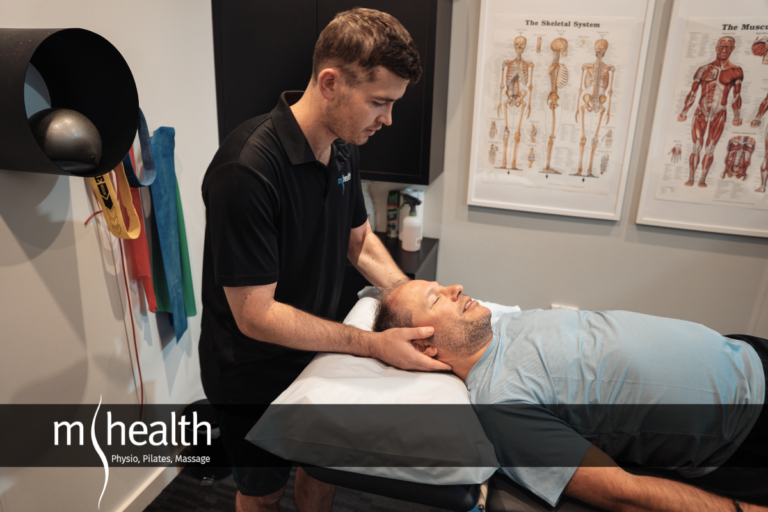
A bone density scan result that shows osteopenia or osteoporosis catches most people off guard. There are rarely obvious symptoms beforehand, and the diagnosis often turns up after a routine scan or, less fortunately, after a fracture from a minor fall. Building stronger bones from that point isn’t a single treatment so much as a long-term project, one that combines medical management with the right kind of physical loading.
At mhealth, osteoporosis physiotherapy runs through the mstrong program, where resistance and weight-bearing exercise get structured around each person’s bone health status, current strength and goals.
What Osteoporosis Does to Your Bones
Osteoporosis develops when bone breaks down faster than the body rebuilds it, leaving bones less dense and more porous than they once were. This process unfolds over years, which is part of why it often isn’t picked up until a scan flags a low T-score or a fracture occurs somewhere like the wrist, hip or spine.
Bone remodels constantly throughout life, and the balance between old bone removal and new bone formation shifts with age. In women, a drop in oestrogen after menopause speeds up bone loss for many. Men experience a decline too, generally later and at a slower rate. A diagnosis of osteoporosis, or the earlier stage known as osteopenia, means bone density has dropped low enough that fracture risk needs active management.
Osteoporosis itself is a medical diagnosis made through a DEXA scan, and physiotherapists don’t diagnose it. What they do manage is the part of care that involves loading bone safely and building the muscle strength that protects joints and lowers fall risk.
Why Exercise for Osteoporosis Matters
Bone responds to load. That’s the principle behind exercise for osteoporosis: when a bone experiences mechanical stress beyond what it’s accustomed to, it adapts by laying down more tissue in the areas under strain. Weight-bearing exercise for osteoporosis, meaning activities where your body works against gravity such as walking or resistance training, tends to be recommended over non-weight-bearing options like swimming, useful as those are for cardiovascular fitness.
Research into bone density exercise points to resistance training as one of the more effective approaches, particularly when it targets the hip and spine, the two sites where fracture carries the greatest consequences. Progressive loading (gradually increasing weight or resistance over time) appears to matter more than simply staying active in a general sense.
There’s a balance to strike here. Bones need enough load to trigger adaptation, but people with reduced density also need to avoid movements that carry a higher fracture risk, such as high-impact twisting or excessive spinal flexion under load. This is where a physiotherapist’s input becomes useful: prescribing load that’s high enough to help without tipping into territory that raises fracture risk.
How mstrong Delivers an Osteoporosis Exercise Program
At mhealth, osteoporosis-specific training isn’t run as a separate class. It’s delivered inside mstrong strength classes, a small group program capped at five participants and supervised throughout by a physiotherapist.
The starting point is a one-on-one assessment. Your physiotherapist reviews your bone density results, or discusses getting a scan if you haven’t had one, and takes a history of any fractures or falls. From there, they assess your current strength, balance and movement patterns before building your program around evidence-based bone loading principles: which exercises to prioritise, how much load to start with, and how quickly to progress.
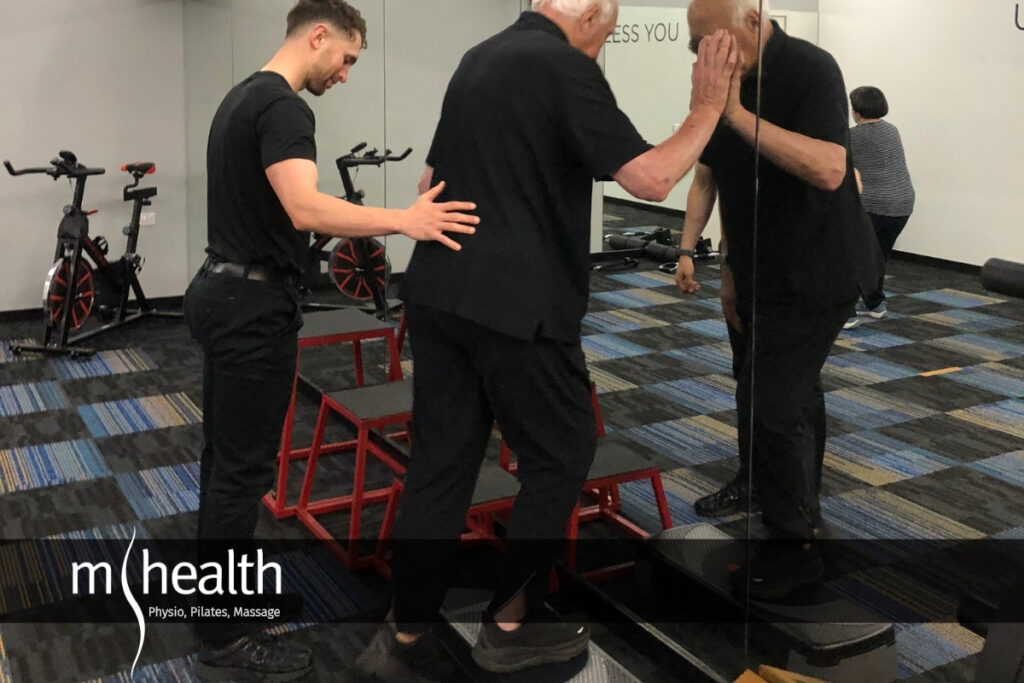
Once you move into the group setting, you’re not following the same routine as everyone else in the room. Your physiotherapist adjusts your resistance, checks your technique on load-bearing movements and progresses you as your strength and confidence build. That supervision matters for osteoporosis specifically, since technique and load selection affect fracture risk in a way they don’t for someone without reduced bone density.
The program doesn’t stop once initial goals are met, either. Bone health management is ongoing, so training continues to progress within mstrong for as long as it’s useful, rather than finishing at a fixed number of sessions.
Strength Training for Osteoporosis and Fall Risk
Fractures don’t only happen because bone is fragile. Many happen because of a fall, and falls happen because of reduced strength, balance or reaction speed. Strength training for osteoporosis addresses both sides of that equation: building bone tissue directly, and building the muscle strength and balance that make a fall less likely in the first place.
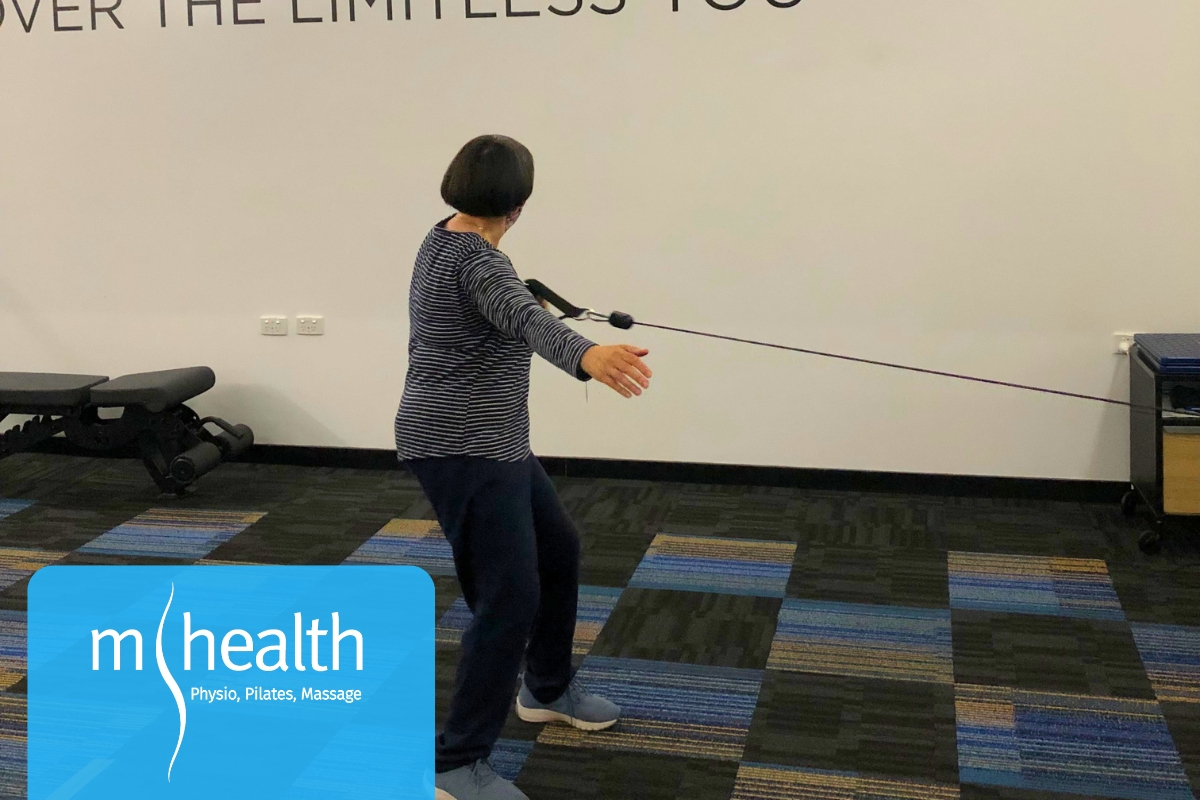
Leg strength plays a particular role in catching yourself before a fall turns into a fracture. A strength assessment before starting a program can identify specific weaknesses, such as reduced quadriceps or hip strength, so your physiotherapist knows where to direct your early training rather than guessing.
When mstrong Might Not Be the Right Starting Point
Not everyone with osteoporosis is ready to begin in a group strength class straight away. Someone recovering from a recent fracture or dealing with significant balance impairment may need a period of individual physiotherapy first, working on pain and basic strength before progressing to group-based training. Others may need clearance from their GP or specialist, particularly if osteoporosis is advanced or other health conditions need factoring into exercise selection.
This is a normal part of the process, not a barrier. Your physiotherapist will talk through whether starting one-on-one, starting in mstrong directly, or waiting until a medical review has happened is the right sequence for you.
Building Stronger Bones: Your Questions Answered
| Questions | Answers |
|---|---|
| What is the best exercise for osteoporosis? | Weight-bearing and resistance exercise are generally considered the most useful for osteoporosis, since they load bone directly and encourage it to strengthen. The right program varies by individual, factoring in bone density, fracture history and current strength, which is why a physiotherapist-guided approach like mstrong tends to work better than a generic routine. |
| Can exercise reverse osteoporosis? | Exercise alone doesn’t reverse osteoporosis, but it plays a meaningful role in slowing bone loss and, in some cases, modestly improving density, alongside medical treatment. Paired with appropriate nutrition and any prescribed medication, structured resistance training is one of the more effective non-drug strategies for supporting bone health long term. |
| Is strength training safe for people with osteoporosis? | Yes, when it’s programmed appropriately. Strength training is one of the more effective tools for managing osteoporosis, but load, technique and exercise selection need to suit your bone density and fracture risk. A physiotherapist can adjust movements to avoid high-risk positions while still providing enough stimulus for bone adaptation. |
| How often should I do weight-bearing exercise for osteoporosis? | Most guidelines point to weight-bearing and resistance exercise several times a week, though the right frequency depends on your current fitness, bone density and any other health conditions. Within mstrong, sessions and progression are structured individually, so your physiotherapist can advise a frequency suited to your situation. |
| Do I need a bone density scan before starting the program? | A DEXA scan isn’t compulsory before starting mstrong, but it gives your physiotherapist useful information to guide your program. If you haven’t had one recently, your physiotherapist can discuss whether it’s worth requesting through your GP as part of your broader osteoporosis management. |
Final Thoughts
Osteoporosis management works best as a long-term combination of medical care, nutrition and the right physical loading, not any single fix. Exercise sits within a person’s direct control more than most other factors, and getting the type, amount and progression right makes a real difference to bone health and fall risk over time. Building stronger bones isn’t a quick process, but it is a structured one, and having a physiotherapist adjust that structure as you progress removes a lot of the guesswork.
If you’ve been told you have osteoporosis or low bone density and want a program guided by a physiotherapist rather than a generic fitness routine, book an initial mstrong assessment with the mhealth team in Mentone.
Book Now or call (03) 8585 2222.