If you’ve been told to rest a sore knee or hip and wait for a flare-up to pass, you’re following advice that’s decades out of date. For years, osteoarthritis (OA) was treated as a wear-and-tear condition best managed by staying off the joint. Exercise for osteoarthritis is now the opposite of what that old advice suggested. Major clinical guidelines list structured exercise as a core treatment, not an optional extra, and the evidence behind that shift is specific enough to act on.
This guide covers what the research actually shows, which types of movement help most, and how to build a program that suits your joint rather than working against it.
Why “Rest and Wait” Turned Out to Be the Wrong Advice
For decades, osteoarthritis (OA) was described as cartilage simply wearing down, similar to tread coming off a tyre. That model made rest sound sensible. If a joint was wearing out, less use seemed like the safer choice.
Current research paints a different picture. OA involves the cartilage, the bone underneath it, the joint lining and the surrounding tissue, all interacting through inflammatory and cellular processes that go well beyond simple mechanical wear. Mechanical stress on a joint can trigger these inflammatory pathways, but the same pathways respond to appropriate, progressive loading. In practical terms, how a joint is loaded matters more than how much rest it gets.
That distinction sits at the centre of mhealth’s osteoarthritis and joint pain management approach, which is built around movement rather than avoidance. Under-loading a joint doesn’t protect it. It tends to accelerate the muscle weakness and stiffness that make OA symptoms harder to manage.
What the Research Says About Exercise for Osteoarthritis
The clearest evidence comes from a 2015 Cochrane systematic review pooling 44 trials of land-based exercise for knee OA. Exercise reduced pain by 12 points on a 100-point scale and improved physical function by 10 points, with benefits still measurable two to six months after formal treatment stopped. Those aren’t small numbers for a condition often assumed to only get worse with time.
The OARSI (Osteoarthritis Research Society International) 2019 guidelines go further, naming structured exercise and patient education as core treatment for knee, hip and polyarticular OA, ahead of medication and well ahead of surgery. Arthritis Australia takes a similar position, placing exercise at the front of the management pathway rather than the back.
None of this means exercise cures OA. It’s a long-term condition, and the research supports exercise as a way to manage pain and function, not remove the condition altogether. What it does show is that a supervised, progressive arthritis exercise program produces measurable, sustained improvement for most people with knee or hip OA. That’s a different message from “take it easy and see how it goes.”
Exercise And Osteoarthritis: Your Questions Answered
| Question | Answer |
|---|---|
| Is exercise safe if I’ve just been diagnosed with osteoarthritis? | Yes, for most people. Structured exercise is recommended as a core treatment for osteoarthritis by OARSI and Arthritis Australia, ahead of medication and well before surgery is considered. Starting light and progressing gradually, ideally with guidance from a physiotherapist in the first few weeks, is the safest way to begin building strength. |
| What’s the best exercise for knee arthritis? | Strength training for the quadriceps and hamstrings, combined with aerobic activity such as walking, cycling or swimming, has the strongest research support for knee arthritis. The right combination and starting intensity depend on your current strength, symptom pattern and goals, which is why an individual assessment helps. |
| Is walking good for osteoarthritis? | Yes. Research following adults aged 50 and older with knee osteoarthritis found regular walkers had 40% lower odds of developing new, frequent knee pain compared with non-walkers. Starting with shorter, flatter walks and building distance gradually as symptoms allow works well for most people managing osteoarthritis. |
| Can exercise reverse osteoarthritis? | No. Exercise manages pain and function and can meaningfully slow the impact of osteoarthritis on daily life, but it doesn’t reverse existing changes within the joint. For most people living with the condition, reduced pain and better function through exercise is still a genuinely worthwhile outcome. |
| When should I see a physio before starting an osteoarthritis exercise program? | Booking an assessment first is worthwhile if your pain is severe, recent, or hasn’t improved on its own after a few weeks. A physiotherapist can match exercise to your specific joint and symptoms, and flag anything that needs a different or more cautious approach before you start. |
Which Osteoarthritis Exercises Help Most
Strength Training
Strengthening the muscles around an affected joint is consistently the best-supported form of osteoarthritis exercise. For people managing knee or hip osteoarthritis specifically, that usually means the quadriceps and hamstrings around the knee, or the glutes and hip stabilisers around the hip. Stronger muscles absorb and distribute force that would otherwise pass straight through the joint.
Progression matters more than intensity here. A program that starts light and adds resistance over weeks, rather than days, tends to outperform one that pushes hard early and stalls. Some soreness during a session is normal. Pain that lingers well beyond 24 hours usually means the load needs adjusting, not stopping altogether. A common question is whether osteoarthritis and gym-based training are compatible. They are, provided the load is progressive and appropriately supervised, particularly in the early weeks. Home programs, resistance bands, and mhealth’s strength classes all work depending on what suits you.
Walking and Other Aerobic Activity
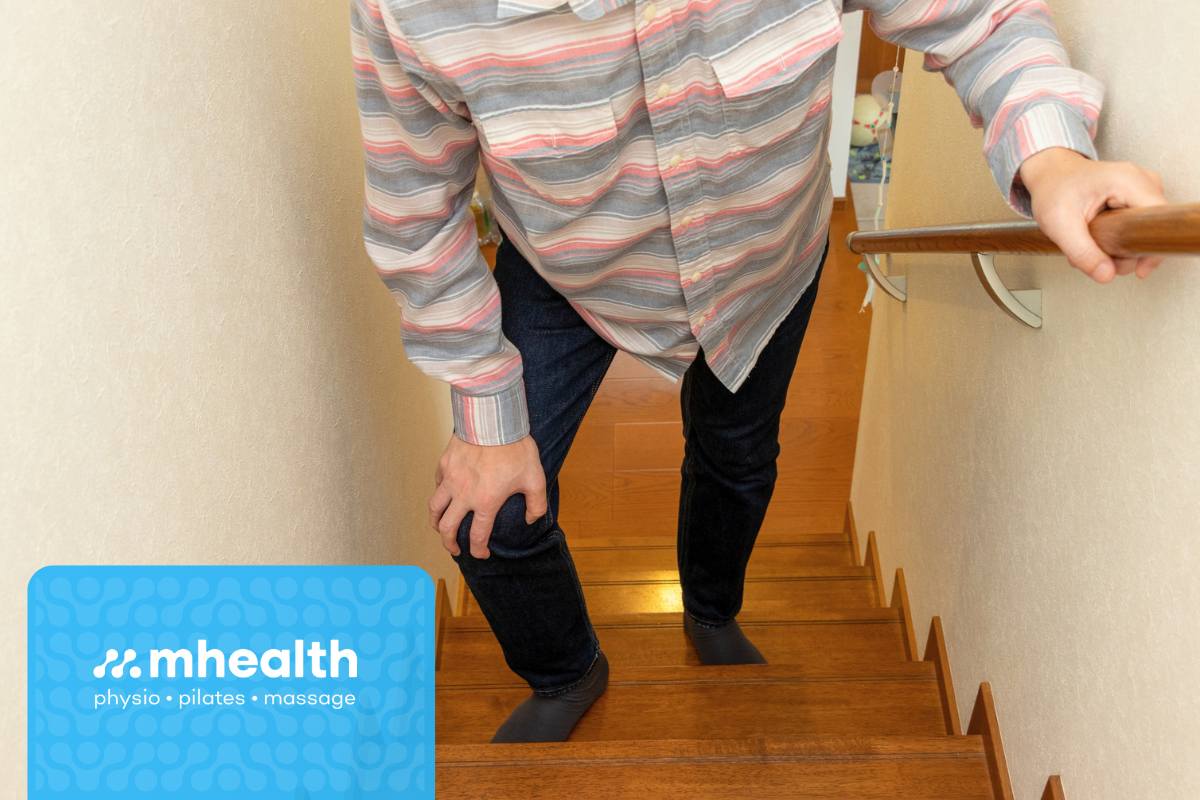
Is walking good for osteoarthritis? The evidence says yes, with a caveat around consistency. A study following adults aged 50 and older with knee OA found that regular walkers had 40% lower odds of developing new, frequent knee pain compared with people who didn’t walk for exercise. Cycling and swimming offer similar benefits with less joint load, which makes them useful during a flare-up or for anyone finding walking uncomfortable at first.
None of these activities need to be intense to help. Building toward the Australian guideline of two and a half to five hours of moderate physical activity each week is a reasonable target for osteoarthritis, spread across the days that suit your joint rather than crammed into one or two sessions.
Matching the Program to Where You’re At
Not every stage of OA calls for the same approach, and a program that ignores this tends to stall. Someone with mild, occasional symptoms can usually handle a fairly standard progressive strength and cardio plan from the outset. Someone with more irritable symptoms, frequent flares or pain that lingers after activity, generally needs a program that starts lower in intensity and range, with smaller, more frequent increases in load.
This is where a lot of self-directed attempts at exercise for osteoarthritis run into trouble. People either push too hard too soon because they’ve heard exercise is good for them, or they stay too cautious because the old rest advice is hard to shake. Both patterns slow things down. A physiotherapist can assess current strength, irritability and range of motion, then build a plan calibrated to that starting point rather than a generic template pulled from the internet.
How to Tell You’ve Overdone It
Some discomfort during and shortly after exercise is expected and isn’t a sign of damage. What matters more is how the joint responds over the following day.
Pain that settles within 24 hours is generally considered a safe response to work through. Pain that’s worse the next morning, swelling that wasn’t there before, or stiffness that takes longer than usual to ease off are signs the previous session asked too much of the joint. Usually the fix is reducing volume or range for a session or two, not stopping altogether.
Tracking this pattern across a few weeks is more useful than judging any single session. OA symptoms fluctuate day to day for reasons that have little to do with how well a program is working.
When Exercise Isn’t the Whole Answer
Exercise won’t resolve every case on its own. Severe joint damage, mechanical instability, or pain that hasn’t responded to a genuine trial of structured loading sometimes needs input from a GP or orthopaedic specialist, and joint replacement remains appropriate for some people with advanced OA. Even then, pre-operative strengthening is associated with smoother recovery, so exercise still has a role on either side of surgery.
Sudden, severe swelling with redness and fever, joint pain following a fall, or symptoms that are worsening rapidly for no clear reason sit outside what exercise alone should be managing. Those presentations are worth a prompt medical review rather than a home program.
Final Thoughts
The research on exercise for osteoarthritis is more settled than most people realise. Structured, progressive movement is recommended ahead of medication and well ahead of surgery, and the pain and function improvements it produces are measurable rather than anecdotal. What changes outcomes isn’t intensity so much as matching the program to the joint, the stage of the condition, and how it responds week to week.
If you’re managing osteoarthritis and aren’t sure where to start, or a previous attempt at exercise left you sore rather than stronger, book an assessment with the team at mhealth in Mentone. We’ll look at how your joint is currently coping and build a program around it. Book an appointment or call the clinic to arrange a time.