
You start a new strength program and by the next morning your legs feel like they belong to someone else. Or you push through a final set at Pilates and feel a twinge low in your back. The question that follows is almost always the same: is this normal, or have I actually done damage? Working out the difference between hurt and harm is one of the more useful skills you can build if you want to keep training without second-guessing every ache. Tolerable pain during exercise is common, expected even, and it isn’t the same thing as pain that signals an injury.
Hurt vs Harm: Two Different Signals
Pain and tissue damage often show up together, but they aren’t the same thing. Nerve endings called nociceptors pick up on mechanical stress, heat or chemical changes in the tissue and send that information to the brain. The brain weighs it against everything else going on, your fatigue, your training history, how safe the environment feels, and decides whether pain is the right response. That decision-making process is worth understanding properly, and we’ve covered how pain works as a protective signal in more depth elsewhere on the blog. The short version relevant here: hurt vs harm comes down to whether that signal reflects genuine tissue damage or simply the nervous system flagging effort.
A heavy squat session that leaves your quads burning the next day is hurt. A rolled ankle that swells within the hour and won’t take weight is harm. Both produce pain. Only one of them means something is structurally wrong.
What Tolerable Pain During Exercise Actually Feels Like
Tolerable exercise pain tends to be dull rather than sharp. It shows up as a general ache, a burning fatigue through the working muscle, or stiffness that’s worse the next morning and eases as you move. This delayed soreness has a name: delayed onset muscle soreness, or DOMS. It typically peaks around 24 to 48 hours after unfamiliar or harder-than-usual training and settles over the following two to three days.
DOMS comes from small amounts of stress placed on muscle fibres during exercise, particularly the lengthening phase of a movement, like lowering into a squat or controlling a bicep curl on the way down. It isn’t tissue damage in the sense that needs treatment. It’s part of how muscle adapts and gets stronger. The soreness that follows a first Pilates class or a return to the gym after a break usually falls into this category, and knowing that can take a lot of the worry out of it.
Muscle soreness vs injury is really the question underneath all of this, and the pattern is the main clue. Soreness spreads evenly through a muscle group, builds gradually, and improves day by day. Injury tends to feel more localised, more sudden in onset, and doesn’t follow that same improving trend.
A Simple Way to Check Where Your Pain Sits
Physios often use a straightforward pain-monitoring approach during rehab and return-to-training programs. Rate your pain out of 10 during the activity and again the next morning.
A score of 0 to 3 is generally fine to continue with. A score of 4 to 5 is worth noting but usually acceptable, as long as it settles back down within about 24 hours and doesn’t get worse session to session. Anything from 6 upward, or pain that’s still elevated the next day, is a signal to back off, modify the load, or leave more recovery time before trying again.
This isn’t a hard rule for every condition or every person, but it’s a practical way to separate good pain vs bad pain without overthinking each individual twinge. What matters more than the number itself is the trend. Pain that’s trending down session to session, even if it shows up during training, is a different picture to pain that keeps building.
Signs Your Pain Has Crossed Into Harm
Some patterns are worth paying closer attention to. Sharp, sudden or stabbing pain during a movement, rather than a gradual burn, is one. Pain that changes how you walk or move outside the gym is another. Swelling, bruising or visible change to the area shortly after activity points away from ordinary soreness. So does pain that wakes you overnight, pain that doesn’t ease at all after a couple of rest days, and pain accompanied by pins and needles, numbness or noticeable weakness.
None of these on their own confirm a serious injury, and plenty turn out to be manageable once looked at properly. But they’re the kind of signals that are better assessed than pushed through. A physiotherapy assessment can work out what’s actually going on and whether the plan needs to change.
Why Supervised, Graded Training Makes This Easier
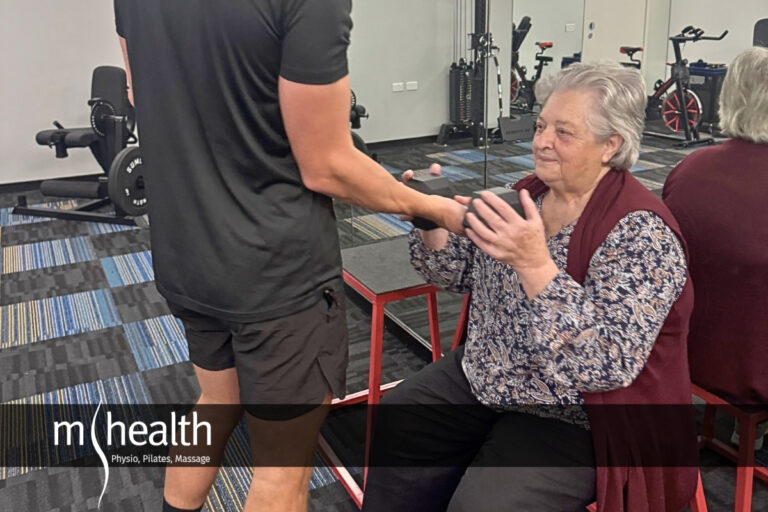
Reading your own pain accurately gets easier with guidance, particularly when you’re newer to structured exercise or coming back from a layoff. This is one of the practical advantages of training under supervision rather than guessing your way through a program alone. A physiotherapist watching your technique and progressing your load can tell the difference between normal exercising through pain and a movement pattern that needs adjusting, often before you’d notice it yourself.
That kind of oversight is the whole idea behind mhealth’s mstrong strength classes, where every program is built around your history and adjusted as you go, with a physiotherapist coaching technique and load in real time. For anyone managing an old injury, a joint condition, or simply wanting to train harder with confidence, having someone else read the signals alongside you takes a lot of the guesswork out of hurt vs harm.
Understanding Exercise Pain: Your Questions Answered
| Question | Answer |
|---|---|
| What’s the difference between hurt and harm during exercise? | Hurt is the discomfort of effort, fatigue or normal muscle soreness that settles within a day or two. Harm means actual tissue damage, such as a strain, sprain or joint injury, that needs rest, modification or treatment rather than pushing through. |
| Is it normal to be sore after exercise? | Yes. Delayed onset muscle soreness (DOMS) commonly follows unfamiliar or harder training, peaking around 24 to 48 hours later and easing over the next few days. It reflects normal muscle adaptation rather than damage. |
| How much pain is okay to train through? | As a general guide, pain around 0 to 3 out of 10 is usually fine, and 4 to 5 is acceptable if it settles within about 24 hours and isn’t worsening session to session. Pain from 6 upward, or pain that doesn’t settle, is worth backing off from. |
| What pain signs mean I should stop and get checked? | Sharp or sudden pain, swelling or bruising, pain that changes how you move, pain that wakes you at night, and pain with pins and needles, numbness or weakness are all worth a physiotherapy assessment rather than pushing through. |
| Can a physio help me tell hurt from harm? | Yes. A physiotherapist can assess your movement, history and how your pain is behaving, then build a program that progresses safely. Supervised, graded training also makes it easier to read your body’s signals accurately as you go. |
Final Thoughts
Tolerable pain during exercise is part of training, not a reason to stop moving altogether. The dull ache of DOMS, the burn through a working muscle, and stiffness that eases as you warm up are all part of the process. What deserves attention is pain that’s sharp, sudden, worsening or not settling with rest. Learning to read that difference, or having someone help you read it, means you can keep training with confidence instead of second-guessing every twinge.
If you’re unsure whether what you’re feeling is hurt or harm, book an assessment with the team at mHealth in Mentone. Our physiotherapists will look at your movement, your training history and your pain pattern, then help you keep moving safely. Book online or call (03) 8585 2222.